
Could your property insurance respond to fire damage but leave rent arrears uncovered? That distinction matters when you’re assessing landlord insurance for commercial tenants in arrears. Cover for lost rent after an insured event, such as damage that makes premises unusable, is not the same as protection when a tenant simply fails to pay.
If rent has stopped arriving, it’s understandable to check your insurance first. But whether cover applies depends on the policy wording, the reason rent has been lost and any relevant conditions or exclusions. Assuming that buildings or property cover includes tenant default could leave you with an unwelcome surprise.
This guide explains how property cover differs from rent protection, which policy details and records to check, and what to ask before deciding what to do next. It also explains why lease terms and the relevant legal position need careful consideration before taking action. The aim is to help you assess your options without prejudicing a potential claim or your position as landlord.
Key Takeaways
- Check whether your policy responds to the cause of the rent loss, not just the fact that rent is unpaid.
- When assessing landlord insurance for commercial tenants in arrears, compare triggers, exclusions, limits, excesses and claims conditions.
- Review the lease, reconcile payments and keep a clear record of communications before deciding on your next steps.
- Check your policy’s notification requirements promptly and seek appropriate advice before taking action that could affect your position.
- A broker can help clarify policy wording and identify questions to raise with insurers, but can’t guarantee cover or a claim outcome.
Landlord insurance for commercial tenants in arrears: what protection can it provide?
Unpaid rent can put pressure on a landlord’s cash flow and leave them unsure where to turn. If you’re considering landlord insurance for commercial tenants in arrears, first separate the rent debt from any damage to the premises. Commercial property insurance can cover risks connected with a property, but what it protects depends on the policy wording, schedule and any endorsements.
Buildings cover is generally concerned with physical damage to the insured premises. Separate cover may respond to lost rental income if insured damage prevents the property from being used, subject to the policy terms. These are different situations: a tenant may owe rent while the building is undamaged, or an insured event may interrupt use even when the tenant has paid rent as agreed.
Rent arrears are not automatically covered by commercial property insurance. A missed payment, by itself, doesn’t show that an insured loss has occurred. Check the documents rather than relying on a general description of cover. For background on the wider category, see this overview of property insurance.
Does commercial property insurance cover unpaid rent?
Not necessarily. Buildings insurance and protection for rent or income are not interchangeable, and rent-related cover may be arranged separately or subject to specific conditions. Check your policy schedule, full wording, endorsements and exclusions to establish what is insured, which events trigger cover and whether tenant default is addressed. The policy’s label alone may not answer that question.
For example, a tenant falling behind while still occupying an undamaged unit is different from a fire making the premises unusable. The first is a payment default; the second may involve physical damage and interrupted rental income. Whether either situation is covered depends on the specific terms, including any limits, waiting periods or other conditions.
Arrears cover and loss of rent are not interchangeable
Loss-of-rent cover may apply when an insured event damages the property and prevents its use, but the trigger and extent of cover vary by policy. Whether cover responds when a tenant fails to pay is a separate question. Don’t assume it’s included: ask whether relevant cover is available for your circumstances, what events qualify, and which exclusions or eligibility conditions apply.
If you’re reviewing the wider risks of owning business premises, the commercial property insurance guide explains broader cover considerations. For arrears, use your own policy documents to establish what protection, if any, applies before treating an unpaid balance as an insurance claim.
How commercial landlord insurance responds to arrears, damage and tenant default
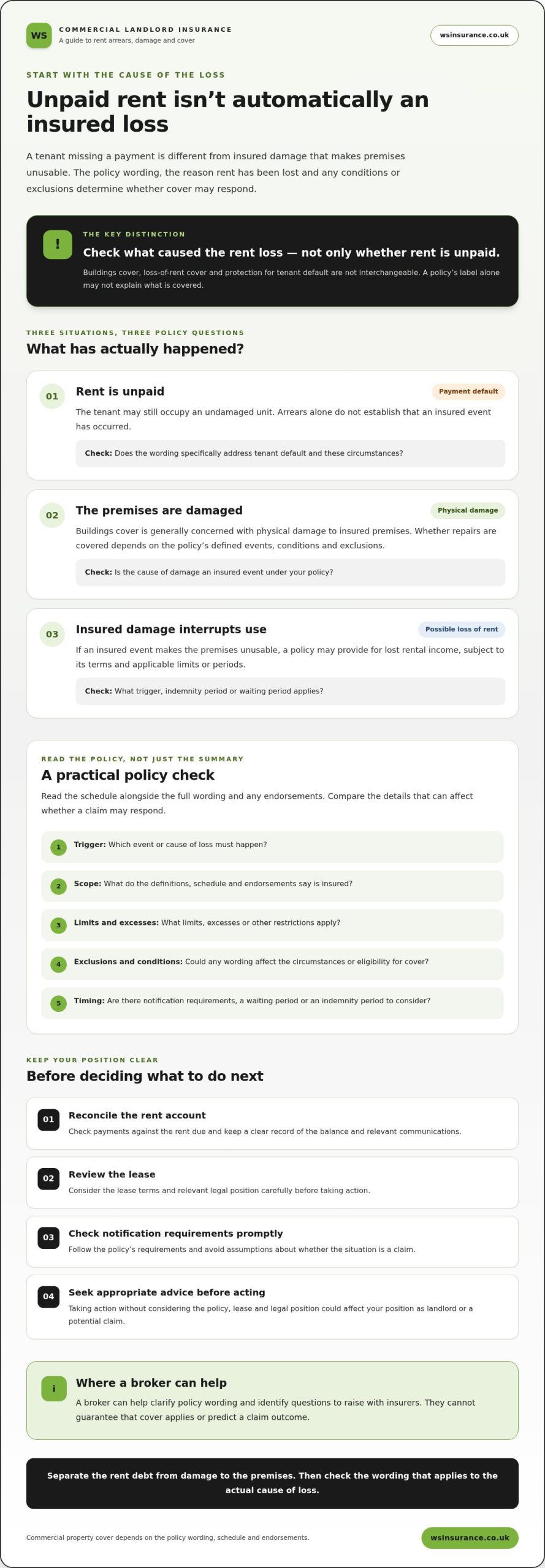
To understand what may happen next, identify which situation you’re dealing with. The cause of the loss matters: a missed payment, damage to the premises and disruption after insured damage can be treated differently under a policy. For a general overview of commercial property insurance, see Forbes Advisor, then check your own policy wording for the terms that apply.
- Rent unpaid: The tenant has missed a payment, but the premises may be undamaged and still in use. Arrears alone don’t establish that an insured event has occurred.
- Premises damaged: An event may have physically damaged the building. Whether repairs are insured depends on the policy’s defined events, conditions and exclusions.
- Premises unusable after an insured event: If insured damage prevents occupation, a policy may provide for loss of rent, subject to its terms, limits and any applicable indemnity period or waiting period.
Tenant default concerns unpaid rent; loss-of-rent cover may instead respond to insured damage that interrupts use of the premises. A tenant’s insolvency, abandonment or breach of a lease doesn’t automatically create an insured claim. If you’re researching landlord insurance for commercial tenants in arrears, the practical question is whether the policy wording covers the specific cause of loss and circumstances.
What policy wording should a commercial landlord inspect?
Read the policy schedule alongside the full wording, not on its own. Check definitions, insured events, conditions, exclusions, limits and endorsements. Look closely at how the policy describes loss of rent, what must happen for cover to apply, and whether a waiting period or maximum indemnity period could affect a payment. Headings and summaries can help you find relevant sections, but they can’t confirm cover by themselves.
Find the notification requirements and any stated deadlines, too. If an incident or possible claim arises, check the wording promptly and ask the insurer or broker about anything unclear. Keep a note of who you contacted and when, so you can track the conversation.
Why tenant type and lease details matter
Insurers may ask about the tenant, its business activity, the lease and the circumstances surrounding the arrears. Provide accurate information and keep the signed lease, payment records and relevant correspondence accessible. Check eligibility and availability for any arrears-related protection with insurers; don’t assume it exists or applies to a particular tenant.
A broker can help explain policy language and identify questions to raise, though this isn’t legal advice or debt recovery. If a policy review would help, you can explore WS Insurance Brokers’ commercial insurance support.
How to compare landlord insurance options when a commercial tenant owes rent
Start a comparison by identifying the event each section of cover is designed to respond to. Don’t compare policies by their labels alone. For landlord insurance for commercial tenants in arrears, check whether the wording addresses unpaid rent at all, then compare the conditions and limits that could affect a claim.
| Cover to check | Possible trigger | What to compare |
|---|---|---|
| Property damage | Physical damage caused by an event specified in the policy | Insured events, exclusions, limits, excess and claims conditions |
| Loss of rent after insured damage | Insured damage interrupts use or occupation of the premises | How loss of rent is defined, any waiting period, indemnity period and applicable limit |
| Possible arrears protection | A qualifying tenant payment default, if such cover is available and included | Eligibility, covered circumstances, exclusions, limits, excess and notification conditions |
This is a comparison framework, not a promise that a particular cover is available. Insurers’ appetite and eligibility requirements can vary, so confirm whether the tenant and lease qualify rather than presuming arrears protection exists. A lower premium doesn’t show whether the cover fits. Compare the protection and conditions with the risks you need to manage.
Which questions help reveal meaningful differences between policies?
Ask the insurer or broker what exact event activates any rent-related cover and whether tenant arrears qualify. Check whether the terms depend on the tenant’s business, lease, occupancy or referencing. Clarify how existing arrears, a rent dispute and late notification are treated. Ask them to point you to the relevant wording, schedule or endorsement so you can check what has been explained.
How to assess suitability for your property and lease
Keep property details, the signed lease and rental figures to hand when comparing terms. They can help insurers assess the risk and explain what information they need. For wider context on protecting business risks, see the business insurance guide. A broker review may also help you compare wording and identify questions for insurers, without guaranteeing availability or a claim outcome.
What to do when a commercial tenant falls behind with rent
A measured response can help you understand the arrears, keep a clear record and avoid assumptions about insurance or your rights under the lease. Start by checking the lease and rent schedule, then reconcile payments received against the amounts due. If the figures don’t match, identify the difference before drawing conclusions: a missed payment, an allocation issue or a disputed amount may call for different next steps.
What records should a landlord gather?
Bring the key documents together before speaking to an insurer, broker or legal adviser. A concise, accurate record makes it easier to explain what has happened and check whether the policy may be relevant.
- The signed lease, rent schedule and invoices.
- A payment ledger showing amounts due and received, with dates.
- Relevant emails, letters and notes of conversations.
- Details of any agreed payment plan or change in circumstances.
When should you contact your insurer, broker or solicitor?
Contact your insurer or broker to check the policy’s notification duties and ask whether the circumstances could engage any cover. Share relevant information accurately, including any dispute or payment arrangement. Don’t withhold facts, assume a claim is covered, or promise yourself or the tenant that an insurer will pay.
Seek advice from a solicitor if you’re considering lease enforcement, the amount owed is disputed, or a decision could affect your legal rights. A broker can help clarify insurance wording and policy administration, but doesn’t provide debt recovery or legal advice. If you’d like help reviewing your commercial property insurance and identifying questions about your policy, contact WS Insurance Brokers.
Reviewing commercial landlord insurance with a broker: practical next steps
A focused broker review can help you understand how your commercial property risks relate to the cover in place, clarify policy wording and identify questions to put to insurers. If your concern is landlord insurance for commercial tenants in arrears, keep the insurance review separate from pursuing unpaid rent. A broker can discuss policy matters, but isn’t a solicitor or debt recovery service.
What information helps make a policy review useful?
Gather details that explain both the property and the tenancy. This gives the broker a clearer basis for reviewing your existing protection and asking insurers relevant questions.
- Property: its use, key features and any relevant changes in occupancy.
- Tenancy: the lease type, tenant’s business activity and rental income arrangements.
- Arrears: the current position, including any dispute or agreed payment plan.
- Insurance: your policy wording, schedule, endorsements and related insurer correspondence.
It can also help to prepare specific questions: what triggers any rent-related cover, which exclusions apply, what notification conditions must be followed, and whether relevant options may be available for your circumstances. Insurers need to confirm availability and eligibility, so treat the review as a way to establish the facts, not as confirmation that a particular cover exists.
What to expect from an independent insurance broker
An independent broker can help you assess risks, explain policy wording in accessible terms and, where appropriate, approach insurers. WS Insurance Brokers works with major UK insurers and provides policy administration and claims support. This can help clarify policy questions and next steps, but a broker can’t guarantee cover will be available, an insurer will accept a proposal or a claim will be paid.
For more on the role and considerations involved in choosing an intermediary, read this guide to choosing an insurance broker. A review is also distinct from legal advice: speak to a solicitor about decisions concerning lease enforcement or your legal rights.
If you’d like to discuss your commercial property insurance needs and clarify which information to review, contact WS Insurance Brokers. Start with the wording, the facts and the questions that matter to your property, rather than assuming the answer in advance.
Take the next step with greater clarity
The key distinction is straightforward: cover for damage to a commercial property, loss of rent after insured damage and unpaid rent due to tenant default are not automatically the same protection. If rent falls behind, check your policy wording and notification requirements, keep clear records, and get appropriate legal advice before taking steps under the lease.
Understanding landlord insurance for commercial tenants in arrears starts with the details: what event triggers cover, what exclusions or limits apply, and whether relevant protection is available for your circumstances. A broker can help clarify the insurance questions, but can’t guarantee cover, insurer acceptance or a claim payment.
WS Insurance Brokers is an independent UK brokerage founded in 2012 and authorised and regulated by the Financial Conduct Authority. With access to major UK insurers and policy-management support, the team can help you review your commercial property insurance needs and identify questions to raise. Discuss your commercial property insurance needs with WS Insurance Brokers.
Frequently Asked Questions
Does landlord insurance cover commercial tenants in arrears?
Not automatically. Standard commercial property insurance is generally concerned with insured property risks, while a tenant missing rent is a payment default. Cover for loss of rent may apply if insured damage interrupts use of the premises, but that is different from arrears protection. Check your policy schedule, wording, endorsements and exclusions to see whether tenant default is covered, and confirm anything unclear with your insurer or broker.
Can I claim for rent arrears on commercial landlord insurance?
Only if your policy includes cover that responds to the specific circumstances and the claim meets its terms. A missed payment alone doesn’t establish an insured loss. Review the trigger, exclusions, limits and notification conditions, and tell the insurer or broker the relevant facts promptly. Don’t assume a claim will be accepted or paid until the insurer has assessed it against the wording.
What is the difference between loss of rent cover and rent guarantee insurance?
Loss-of-rent cover may respond when insured damage makes a property unusable, subject to the policy terms and any applicable limits or indemnity period. Rent guarantee or tenant-default protection is intended to address qualifying non-payment, if such cover is available and included. The triggers and conditions differ. Check the policy documents rather than assuming that a reference to “loss of rent” means tenant arrears are covered.
Does rent guarantee insurance cover commercial tenants?
It may be available in some circumstances, but commercial tenant eligibility and product availability must be confirmed with insurers. Terms can depend on factors such as the tenant, business activity, lease and arrears circumstances. Ask what events qualify, whether existing arrears or disputes are excluded, and what evidence or notification conditions apply. Don’t assume a policy designed for another tenancy type will cover a commercial lease.
What should I do first when a commercial tenant misses rent?
Start by checking the lease and rent schedule, then reconcile amounts due against payments received. Keep relevant correspondence and record any discussions or agreed payment plans. Check your insurance wording promptly for notification requirements, but treat that as separate from debt recovery or lease enforcement. If you’re considering action under the lease or the arrears are disputed, seek advice from a solicitor familiar with the relevant UK jurisdiction.
Can a landlord claim loss of rent if a commercial property is damaged?
Possibly, if the damage results from an insured event and the policy includes loss-of-rent cover that applies to the circumstances. The property may need to be unusable or affected in a way defined by the wording. Check the exclusions, limit, excess, waiting period, indemnity period and notification conditions. Contact your insurer or broker to clarify the requirements and report the facts; a claim outcome can’t be guaranteed.
Does commercial property insurance cover a tenant who stops trading?
A tenant stopping trading doesn’t, by itself, mean the insured property has been damaged or that the landlord can claim for lost rent. The tenant’s business circumstances and the landlord’s insurance are separate matters. Check whether the policy has relevant cover and what event triggers it. If the premises become vacant, review the policy conditions and contact the insurer or broker to confirm any requirements.
Should I contact an insurance broker about commercial rent arrears?
Yes. A broker can help you review your commercial property risks, clarify policy wording and identify questions to raise with insurers. For landlord insurance for commercial tenants in arrears, bring the policy documents, lease, rent records and a clear account of what has happened. A broker can’t guarantee that cover is available, an insurer will accept a proposal or a claim will be paid, and can’t replace legal advice about lease enforcement.