
Could two businesses choose the same £1 million public liability limit and pay very different premiums? Yes. If you’re asking “how much is 1 million public liability insurance”, the answer depends on the work you do and the risks involved, not just the limit shown on the policy.
It’s easy to mistake £1 million for the price of cover. It’s actually the policy’s maximum indemnity limit, subject to its terms, conditions and exclusions. Your premium is the price you pay for the policy. Insurers may consider your trade, public contact, turnover, claims history and the cover you need, so the limit alone won’t tell you what a policy will cost.
This guide explains what a £1 million limit means, why premiums differ between businesses and how to assess whether that level of cover fits your work. It also sets out what to compare in policy wording, including exclusions and conditions, so you can make a more informed decision about your business’s protection.
Key Takeaways
- There’s no single answer to “how much is 1 million public liability insurance”; £1 million is the indemnity limit, not the premium.
- What a policy covers depends on the claim, the circumstances and the wording, including its exclusions and conditions.
- Your work, public contact, turnover, workforce details and claims history can all influence how insurers assess risk.
- Use your business’s exposures, potential losses and contract requirements to judge whether a £1 million limit is suitable.
- An independent broker can assess your risk, compare insurer terms and explain cover and policy changes.
How much is £1 million public liability insurance in the UK?
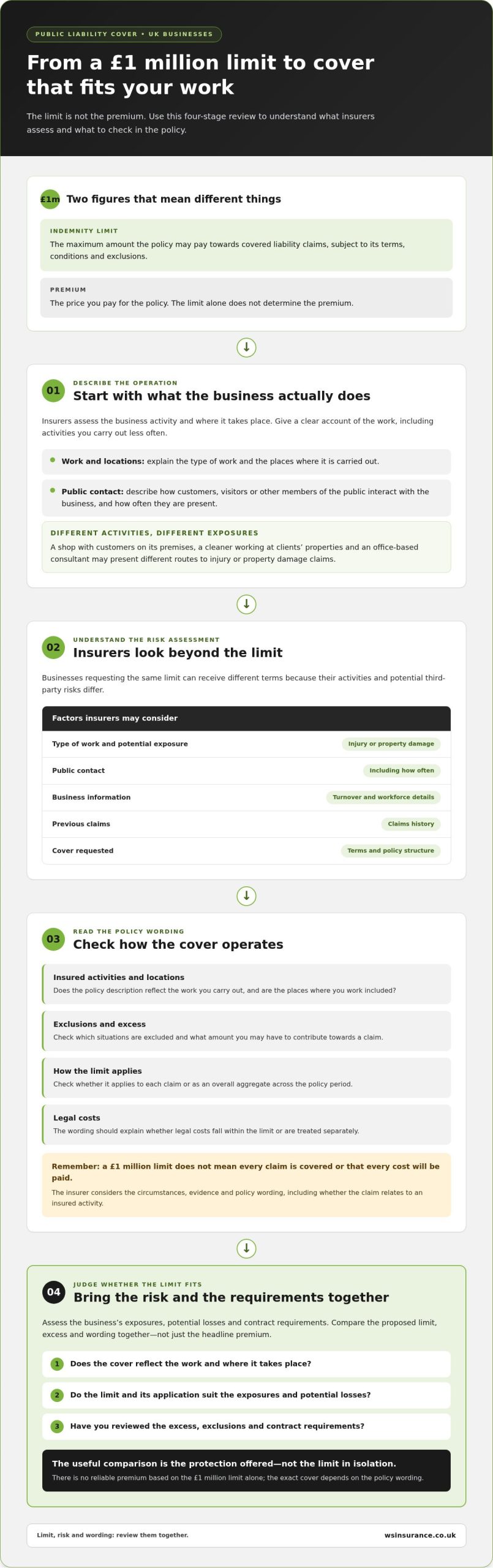
There’s no single premium for every UK business seeking a £1 million public liability limit. The figure describes the policy’s indemnity limit, not what you pay for insurance. The indemnity limit is the maximum amount a policy may pay towards covered liability claims, whilst the premium is the price you pay for the cover. The exact scope of the limit depends on the policy wording.
Before setting a premium, insurers assess the business activity, potential exposure to third-party injury or property damage, and the terms requested. A business carrying out work at customers’ premises may present different exposures from one operating solely online. The type of work, where it takes place and how the policy is structured all help determine the terms offered. There isn’t a reliable price based on the limit alone.
What does a £1 million public liability limit mean?
The limit sets a ceiling on what the insurer will pay for covered liability claims, subject to the policy’s definitions, conditions and exclusions. Check whether it applies to each claim or whether a total limit applies across the policy period. The wording should also explain whether legal costs fall within the limit or are treated separately. A general explanation of liability insurance can help clarify the purpose of this type of protection, but your own policy wording determines how cover works.
The limit is different from the excess, which is the amount you may have to contribute towards a claim under the policy. Check the schedule and wording together to see how the excess applies. A £1 million limit doesn’t mean every claim will be paid up to that amount or that the insurer will meet every cost arising from an incident.
Why is there no standard premium for every business?
Insurers may ask about the type of work, where it’s carried out, how often members of the public are present, turnover, workforce details and previous claims. The policy terms requested can also affect the assessment. Describe the work clearly, including activities you carry out less often, so the insurer can assess the risk accurately.
- Describe the work and the places where it takes place.
- Explain how your business interacts with customers, visitors or other members of the public.
- Provide accurate business and claims information, then review the proposed limit, excess and wording together.
These details make a quote easier to interpret and compare. Focus on what the policy covers, how the limit operates and what you might need to pay yourself, not just the headline premium. This gives you a clearer view of the protection offered for your business.
What does £1 million public liability insurance cover?
Public liability insurance is designed to respond to qualifying claims from third parties who allege that your business activity caused them injury or damaged their property. Depending on the policy, it may cover compensation and associated legal costs. Public liability insurance can cover eligible third-party injury or property-damage claims arising from business activity, subject to the policy terms, circumstances and exclusions.
The £1 million limit doesn’t mean every incident or loss is automatically covered. The insurer considers the circumstances, evidence and policy wording, including whether the claim relates to an insured activity. An incident might lead to a claim, but that alone doesn’t determine whether the policy will pay.
Which business incidents might lead to a claim?
A visitor might be injured after slipping on a business’s premises, or a worker might accidentally damage a customer’s flooring whilst carrying out a job. These situations could lead to a third-party claim, but they don’t guarantee cover. The insurer will assess what happened, the business’s responsibility and the relevant policy terms before deciding how to respond.
Keep a clear account of the work your business does and where it takes place. If your activities change, review the policy description so it continues to reflect the work being insured. An incomplete or outdated description can make it harder to understand how the wording applies to a claim.
What should businesses check in the policy wording?
Start with the activities insured and any limits on where cover applies. Then review the exclusions, excess and how the limit applies to individual claims or in aggregate across the policy period. Check whether legal costs are included within the limit or dealt with separately. These details can affect the protection available, even when the headline limit appears to match your needs.
- Insured activities: Does the policy description reflect the work you actually carry out?
- Territorial scope: Are the places where you work included?
- Exclusions and excess: Which situations are excluded, and what contribution might you need to make towards a claim?
- Limit wording: Does the limit apply per claim, or is there an overall aggregate limit?
Public liability isn’t a substitute for cover addressing other risks. Employers’ liability relates to claims involving employees, whilst professional indemnity is designed for claims arising from professional advice, services or errors, subject to its wording. The Financial Conduct Authority’s information on professional indemnity insurance offers context on that distinct type of cover.
So, how much is 1 million public liability insurance worth to your business? The limit is only part of the answer. Understanding what it responds to, and where its boundaries lie, helps you assess whether it reflects your work. WS Insurance Brokers can assess your business risks and explain the terms available for public liability insurance cover.
What affects the cost of £1 million public liability insurance?
If you’re asking how much is 1 million public liability insurance, the limit alone can’t determine the premium. Insurers assess the risks behind the work and the terms requested, so two businesses with the same limit may receive different quotes. No single factor guarantees a particular price or outcome. The details matter.
How does the type of work influence the premium?
Physical work can introduce other considerations. A tradesperson working in a customer’s home may handle belongings or use tools on the premises, whilst a business operating from an office may have fewer interactions of that kind. These are examples, not fixed risk classifications. The frequency, setting and precise nature of the work all help shape the assessment.
What business information may insurers assess?
Insurers may consider turnover, employee numbers, the activities carried out and previous claims. These details provide context: turnover may indicate the scale of operations, whilst workforce information and claims experience help describe the business’s exposure. Insurers assess these factors together, and none by itself guarantees a particular premium or decision.
Give clear, consistent information when arranging or renewing cover. Describe the work you actually undertake, rather than relying on a broad label that could leave important activities unexplained. Update your details if the business changes. Incomplete or inaccurate information can affect whether the quoted terms reflect your needs, so take care when providing activity descriptions, turnover and workforce figures.
Other policy choices can affect the terms presented. Insurers may take account of:
- Scope of cover: The activities and circumstances included, alongside any exclusions or extensions.
- Excess: The amount you may need to contribute towards a claim, as set out in the policy.
- Limit requested: The amount of protection sought and how it applies under the wording.
- Underwriting approach: Insurers use their own criteria to assess risk, so the same business details may not produce identical terms across the market.
These factors work together. A higher excess changes what you may pay towards a claim, but it doesn’t guarantee a lower premium. Similarly, requesting a particular limit doesn’t ensure that every activity is covered. Compare the wording and terms alongside the price, not in isolation.
Before seeking or renewing cover, prepare an accurate summary of your activities, turnover, workforce and claims history. Then review the proposed scope, limit and excess together. A broker can assess this risk profile and compare insurer terms, helping you understand how your business details relate to the cover offered.
Is £1 million enough public liability cover for your business?
A £1 million limit may meet a particular contract or venue’s stated requirement, but that alone doesn’t show whether it’s adequate for your business. Treat the requirement as one part of your assessment, not a complete measure of your exposure. A smaller business can still carry out work where an injury or damage claim could have serious financial consequences.
Use a practical sequence: map how people encounter your business, check any contractual requirements, consider the potential scale of a claim, then examine the policy conditions. This keeps the decision grounded in what you do rather than assumptions based on turnover or headcount alone.
How to assess your likely third-party exposure
Start by noting where customers, visitors or members of the public come into contact with your business. Include your own premises, client sites, events and any other places where your work takes you. Consider the tasks carried out there and what could realistically cause injury or damage. The aim isn’t to predict every incident, but to identify the types and potential severity of losses connected with your work.
How to compare quotes beyond the premium
Put the policy terms side by side before deciding. Check whether each quote describes the same activities, then compare the indemnity limit, excess, exclusions and conditions. Review the wording against any contract or venue requirement. A limit that matches the stated figure may still leave a gap if the relevant work is excluded or the policy’s conditions aren’t met.
- List the places and situations where third parties may encounter your business.
- Check the precise insurance requirement in each relevant contract or venue terms.
- Consider the potential impact of injury or property damage arising from your activities.
- Compare the insured activities, limit, excess, exclusions and conditions across quotes.
A client or venue requirement answers a specific question: what limit must be in place to undertake that work? It doesn’t necessarily account for every exposure elsewhere in your business. Review the rest of your operations too, and consider whether other types of business insurance address risks that public liability doesn’t. A review of your public liability cover can help align the policy terms with your work and contractual needs.
If you’re weighing up how much is 1 million public liability insurance worth for your circumstances, focus on the protection and conditions offered, not just the premium or whether a contract accepts the limit. WS Insurance Brokers can assess your business risks and compare insurer terms to help you make an informed choice.
How WS Insurance Brokers can help arrange public liability cover
Arranging cover starts with understanding how your business operates, not simply selecting a limit. WS Insurance Brokers assesses your activities and risk profile, then approaches its panel of UK insurers for suitable terms. As an independent brokerage, it can compare available options and explain important differences in cover, excesses, exclusions and conditions, helping you make a more informed decision.
What information helps build a tailored insurance enquiry?
A clear picture of your business helps insurers assess the risk and offer terms that reflect the work you do. Before making an enquiry or renewing, gather relevant details and describe your activities consistently. Include occasional work as well as your main services, since the full range of activities may be important to the assessment.
- Business activities: Explain the work you carry out, where it takes place and how customers or members of the public interact with you.
- Business details: Prepare accurate turnover and workforce information relevant to the enquiry.
- Contracts and venues: Gather any insurance requirements that specify a liability limit or particular terms.
- Existing cover and claims: Share current policy details and relevant claims history, ensuring the information is complete and accurate.
Having these details to hand makes it easier to describe the risk clearly and identify terms that fit the work. If your activities, workforce or contractual requirements change, tell your broker so the policy can be reviewed against your updated circumstances.
What support can an independent broker provide?
WS Insurance Brokers uses information about your business to assess its risk profile and source tailored cover from a panel of UK insurers. It can explain how proposed terms relate to your activities, helping you understand what the policy covers and where its conditions or exclusions apply. The aim is an informed comparison, not simply a choice based on the headline premium.
Support can continue after cover is arranged. Policy administration may include managing policy details and processing mid-term adjustments when your circumstances change. If a claim arises, WS Insurance Brokers can provide claims advocacy, supporting you through the process and communicating with the insurer. The insurer assesses each claim under the policy terms, so advocacy doesn’t guarantee a particular decision or outcome.
If you’re considering how much is 1 million public liability insurance for your business, a tailored assessment can put the limit and policy terms into context. Discuss public liability insurance with WS Insurance Brokers to explore cover suited to your business needs.
Take the next step towards clearer cover
Before choosing a policy, consider what you need the cover to do as your business develops. A new contract or changes to your activities can be a good reason to review your arrangements. Understanding how much is 1 million public liability insurance means looking beyond the limit and checking whether the terms make sense for your actual work.
WS Insurance Brokers is an independent brokerage authorised and regulated by the Financial Conduct Authority. The team assesses your risk profile, approaches a panel of UK insurers for tailored terms and explains the cover so you can make an informed choice. Support can continue through policy administration and claims advocacy, without promising a particular claims outcome.
A considered review can make the decision more straightforward. Discuss your public liability insurance needs with WS Insurance Brokers and take a considered next step towards cover that reflects your business.
Frequently Asked Questions
Is £1 million public liability insurance enough for a small business?
It can be, but being a small business doesn’t automatically make a £1 million limit appropriate. Consider the work you do, where it takes place and the potential severity of a claim. A sole trader working at a customer’s premises may face different exposures from a business with no public contact. Check whether a client, landlord or event organiser sets a minimum limit in its contract.
Is public liability insurance a legal requirement in the UK?
Can a public liability claim exceed the policy limit?
Yes. A claim could be assessed at more than the policy’s applicable limit. The insurer’s contribution is subject to the policy wording and limit, and the business may be responsible for amounts above the available cover. How legal costs are treated can also affect the protection, as they may be included within the limit or handled separately. Check the wording to understand how the limit applies to each claim and in total.
Does public liability insurance cover damage to a customer’s property?
It may respond to a qualifying claim alleging that your business accidentally damaged a customer’s property, but cover isn’t automatic. For example, damage during work at a client’s premises would be considered against the insured activities, circumstances and policy exclusions. The insurer assesses the claim before deciding how the wording applies. Describe the work accurately when arranging cover, particularly if it involves handling, moving or working near customers’ belongings.
Does public liability insurance cover employees who are injured at work?
Public liability insurance is generally intended for claims from third parties, not employees injured in the course of their work. Employers’ liability insurance is designed to address claims made by employees for work-related injury or illness, subject to its policy terms. An employee injured whilst carrying out their duties would usually fall under a different type of cover from a customer injured on the premises. Review your policies to understand the distinction.
Can a business change its public liability insurance limit during the policy term?
You can request a change during the policy term, but it isn’t automatic. The insurer will need to consider the request and may adjust the policy terms or premium if it accepts the change. Tell your broker why you need the change, such as a new contract requiring a different limit, and allow time for revised terms to be agreed. Keep written confirmation of any accepted amendment with your policy documents.
What information do I need to get a public liability insurance quote?
Prepare a clear description of your business activities, annual turnover, workforce and how customers or the public interact with your work. Include where activities take place, any contract or venue insurance requirements, relevant claims history and details of existing cover. For how much is 1 million public liability insurance, insurers need this context to assess the risk and terms rather than relying on the limit alone. Keep your information consistent and up to date.