
Taking several holidays this year doesn’t automatically make annual multi trip travel insurance the right choice. An annual policy can be simpler than arranging cover for each trip, but a long holiday, a destination outside your cover area or an activity excluded by the policy could leave a gap when you need protection.
It’s reasonable to want one policy that fits your travel plans without repeated paperwork. The important step is checking the terms against the way you actually travel, rather than assuming “annual” means every trip, destination and activity is included.
This guide explains how annual multi-trip cover works and what to compare, including destination areas, maximum trip lengths, medical conditions, activities and exclusions. It also covers what information to disclose and when to seek advice. If the policy wording or your circumstances are difficult to assess, speaking with an independent insurance broker can help you review your requirements and understand the terms before choosing cover.
Key Takeaways
- Check whether annual multi trip travel insurance suits the number and type of journeys you expect to make during the policy period.
- Confirm that every planned destination is within the policy’s area of cover, and compare the maximum permitted length of each trip.
- Compare medical, cancellation, baggage and liability cover alongside limits, excesses, exclusions and optional extensions.
- Before choosing, list your likely journeys, travelling companions, medical details and planned activities so you can check them against the policy terms.
- Keep your policy documents and check your cover before travelling or changing your plans. Seek advice if the wording or your circumstances are difficult to assess.
What annual multi-trip travel insurance covers, and who it may suit
Annual multi-trip travel insurance is one policy intended to cover multiple eligible trips during a set period. A single-trip policy, by contrast, is arranged for one journey. The difference sounds simple, but annual cover doesn’t necessarily include every trip you take. The policy may specify who is eligible, how many journeys are covered, which destinations are included and how long each trip can last.
Policies vary, so treat “annual” as the cover period, not a promise of unlimited travel or protection in every circumstance. For a general introduction to policy types and terminology, see Travel insurance. Always check the current policy wording and documents for the cover being considered.
When is annual multi-trip cover worth considering?
Start by listing the journeys you expect to take during the policy period. Note the destinations, approximate durations and who will travel. This gives you a basis for comparing one annual policy with separate cover for each trip. If you expect several journeys, having one policy to check may be convenient. If you have only one trip planned, a single-trip policy may be a more direct fit. Neither option is automatically cheaper or better suited to you.
Does annual cover mean unlimited travel?
No. The permitted number of journeys and the maximum duration of each journey are separate limits. A policy may allow multiple eligible trips but still restrict the length of any one trip. Destination areas and other eligibility conditions may apply too, so an itinerary that changes or includes several countries needs careful checking.
Before choosing, compare your plans with the policy’s definitions and limits. Check the documents for any trip-count restriction, maximum trip length, destination area and rules about who is eligible for cover. If any part of your itinerary appears to fall outside the stated terms, don’t assume it is included. Confirm the position before relying on the policy.
How annual multi-trip travel insurance limits apply to each journey
An annual policy can cover repeated journeys without making each one unrestricted. The wording may set separate rules for eligible travellers, the number of trips, destinations and the length of each journey. These limits work together. For example, a destination might be within your chosen area of cover, while your stay there exceeds the permitted trip duration.
How do destination zones and worldwide cover work?
Check every country on your itinerary against the policy’s geographic definitions, including places where you’ll stop over. “Europe” and “worldwide” aren’t necessarily defined in the same way by every insurer, and worldwide options may have different terms or exclusions. Don’t rely on the zone name alone. Check the wording to confirm that each destination is included and whether any exclusions apply.
If your plans change, check the new destination before travelling rather than assuming it falls within your existing area of cover. GOV.UK’s official government travel insurance advice is also a useful reference when reviewing your cover alongside travel guidance.
What if a trip exceeds the policy’s duration limit?
Compare the maximum duration allowed for each journey with your longest planned trip, not just the total number of holidays you expect to take. A policy may cover multiple trips during its term but still limit the length of each one. Check how the insurer defines a trip and counts its duration, as well as what the policy says if your return is delayed.
An extension may be available under specified terms, but don’t assume it can be added or will apply automatically. Confirm its availability and any conditions with the insurer before booking or travelling, especially if your itinerary could run beyond the stated limit.
UK breaks need checking too. Some policies may cover qualifying domestic trips only when particular conditions are met, such as requirements relating to accommodation or the length of the stay. Conditions vary, so check what counts as an insured UK trip in the policy documents instead of assuming a night away is covered.
Before relying on the policy, check your destinations, stopovers, longest journey and any UK break against the current wording. If the terms are difficult to compare, discussing your requirements with an independent broker can help clarify what to check. You can find out more about travel insurance advice from WS Insurance Brokers.
How to compare annual multi-trip policies beyond the headline benefits
Large headline limits can look reassuring, but they don’t tell you whether a particular claim would meet the policy’s conditions. Compare the wording against situations you might face, such as needing medical treatment abroad, cancelling before departure or replacing a lost item. A lower excess or broader-looking benefit isn’t enough on its own. Check the exclusions and conditions that apply to each section of cover.
Use a side-by-side comparison to identify differences. The points below are prompts, not assumed features or terms of every policy.
| Cover area | What to compare |
|---|---|
| Medical and repatriation | Limits for emergency treatment and repatriation, relevant exclusions, excesses and any requirement to contact the assistance service. |
| Cancellation and cutting a trip short | Which events are covered, when cover starts, applicable limits and exclusions for circumstances known before purchase. |
| Baggage and belongings | Overall limits, per-item or valuables sub-limits, evidence requirements and the excess for a claim. |
| Personal liability | The limit, applicable exclusions and what the policy requires you to do if an incident occurs. |
| Emergency assistance | How to contact the assistance service, what support it provides and any steps to take before arranging treatment or changing travel plans. |
Then compare each policy’s excess, exclusions and optional extensions alongside its main limits. An optional extension may address a particular need, but check its precise scope, conditions and cost with the insurer. Read both the policy wording and the Insurance Product Information Document (IPID). The summary can help you get your bearings, but may not explain every condition or exception. Focus on how well the terms fit your plans, not simply on the lowest price or the biggest headline figure.
Which cover limits and exclusions deserve close attention?
How should pre-existing medical conditions be handled?
Answer the insurer’s medical questions fully and accurately. Acceptance, screening and any terms or exclusions depend on the insurer and the details disclosed, so don’t assume one provider’s decision applies to another. Ask for the outcome and any conditions to be confirmed in writing before relying on cover. If comparing terms feels difficult, speaking with an independent broker can help you review your requirements and the policy wording.
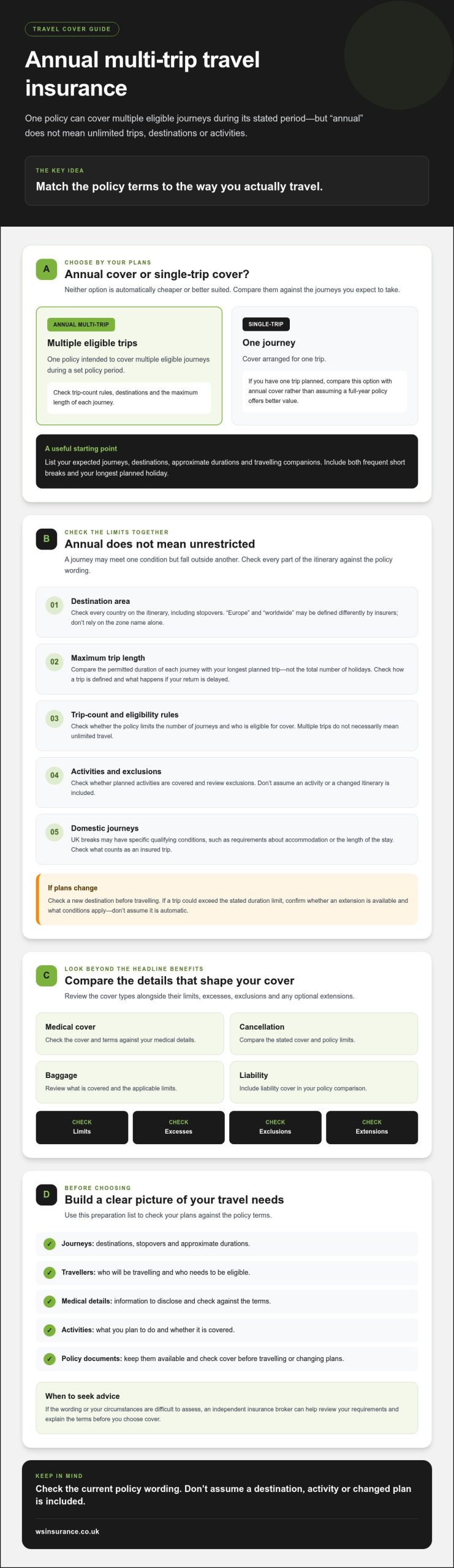
A practical checklist for deciding whether annual cover fits your plans
A useful comparison starts with the journeys you’re likely to take, not a policy’s headline description. Use this checklist to organise your requirements before requesting a quote for annual multi trip travel insurance or separate policies.
Five checks to complete before requesting a quote
- List your likely journeys. Note each trip’s approximate dates, countries and expected duration. Include journeys you’re considering, not just those already booked.
- Check every destination. Record stopovers as well as final destinations, then compare them with each policy’s geographic definitions and exclusions.
- Identify who needs cover. List each traveller and check how the policy treats travelling companions and their eligibility. Don’t assume everyone in a group is covered on the same terms.
- Prepare accurate medical information. Gather the details needed to answer the insurer’s questions fully. Disclose conditions and other requested information, then check how the insurer has recorded its decision and any terms.
- Note activities and cover priorities. Include planned activities and identify the limits or optional protections that matter to your trips, such as cancellation, baggage or medical cover. Check the wording for relevant exclusions.
This gives you a practical basis for comparing policies against your actual plans. Keep the list handy when checking quotes and documents. Note any journey that may exceed a duration limit or fall outside a destination area.
When might separate single-trip cover be more suitable?
Separate cover may be worth considering if you’re planning one journey or if a trip doesn’t fit an annual policy’s destination or duration terms. Compare options on a like-for-like basis: use the same travellers, itinerary, dates and cover requirements, then check limits, excesses and exclusions alongside the premium. The suitable choice depends on your circumstances, current quotations and the policy terms, not the format alone.
If your plans or personal circumstances make the comparison difficult, you can discuss your requirements with WS Insurance Brokers. As an independent UK brokerage, WS can review your needs and help clarify the policy wording. Confirm which annual policies and features are currently available, and check the insurer’s terms before relying on cover. Discuss your travel insurance requirements with the team.
Choose annual multi-trip travel insurance with clear advice and next steps
The right annual policy is one whose terms fit your actual journeys, the people travelling and the protection you need. Before deciding, check that your destinations and trip lengths meet the policy limits, and that relevant medical details and planned activities have been considered. A broad list of benefits is useful only if the terms suit your circumstances.
What information should you have ready?
Having key details to hand can make it easier to get accurate quotes and compare the options. Prepare:
- Details of each traveller, including any information needed to answer the insurer’s medical questions.
- Your planned destinations, likely travel dates and the longest expected journey.
- Any activities you intend to take part in, so you can check whether they’re covered or excluded.
- Questions about policy exclusions, excesses, optional cover and how to access claims support.
Answer medical questions fully and accurately, and check how the insurer has recorded any screening decisions, terms or exclusions. Keep the policy wording, schedule and other documents together, and make sure you know how to contact the insurer if you need to ask about cover.
Review your documents before travelling, and check with the insurer if your plans change, such as adding a destination or extending a trip. Don’t assume a change is covered until you’ve confirmed it. Keeping clear records can help you refer back to the terms you agreed to.
When can an insurance broker help?
If you’re unsure how your requirements match the wording, an independent broker can help clarify what to check and compare options available from insurers. WS Insurance Brokers is an independent UK brokerage with access to major UK insurers. Policies, features and options may vary; eligibility and terms depend on the insurer and your individual circumstances. Review the insurer’s current documents before choosing or relying on cover.
There’s no need to guess your way through complex terms. If you’d like help reviewing your travel insurance requirements and understanding the next steps, discuss your travel insurance requirements with WS Insurance Brokers.
Make your travel cover fit the way you travel
The right annual multi trip travel insurance starts with your itinerary, not the policy headline. Check that every destination and your longest journey fit the terms, then compare medical, cancellation and baggage limits, excesses and exclusions against the protection you need.
Be accurate when sharing traveller and medical details, and keep your policy documents to hand. If plans change, confirm with the insurer that your cover still applies before travelling. These checks can help you choose with greater confidence, whether annual cover or separate single-trip policies better suit your year.
If you’d like help reviewing your requirements and comparing available options, WS Insurance Brokers is an independent UK insurance brokerage with access to major UK insurers. The firm is authorised and regulated by the Financial Conduct Authority and provides transparent advice and dedicated claims support. Policy terms and availability depend on the insurer and your circumstances.
Discuss your travel insurance requirements with WS Insurance Brokers and take your next step with greater clarity.
Frequently Asked Questions
Is annual multi-trip travel insurance worth it?
Annual multi trip travel insurance may suit you if you expect to take several trips during the policy period, but it isn’t automatically better value than arranging cover for each journey. Compare annual and single-trip options using the same destinations, dates, travellers and protection requirements. Check trip limits, destination area, maximum duration per journey and exclusions. If you’re planning only one trip, compare both formats rather than assuming an annual policy will save money.
How many trips can I take on annual multi-trip travel insurance?
The permitted number depends on the policy. Some policies may limit how many eligible journeys you can make, so don’t assume “multi-trip” means unlimited trips. Check the current policy wording for any trip-count restriction, how a journey is defined and who is eligible. Also confirm that each destination and the duration of every trip meet the terms. If your plans change, check with the insurer that the cover still applies.
How long can each trip be under annual multi-trip travel insurance?
There isn’t one standard trip length that applies to every policy. Annual multi-trip travel insurance may have a maximum duration for each journey, even if it covers multiple trips during the policy period. Compare that limit with your longest planned stay, including any extension to your itinerary. Check how the insurer counts trip days and what applies if your return is delayed. Ask the insurer before relying on an extension.
Can annual multi-trip travel insurance cover pre-existing medical conditions?
Cover may be available, but acceptance and terms depend on the insurer and your disclosed medical details. Answer all medical questions fully and accurately, and complete any screening the insurer requests. Check whether the insurer has applied exclusions, conditions or other restrictions, and ask for its decision to be confirmed in writing. Don’t assume a condition is covered simply because you’ve disclosed it. Review the policy documents before travelling.
Does annual multi-trip travel insurance cover UK holidays?
Some policies may include qualifying UK breaks, but eligibility conditions vary. The wording may specify requirements relating to the type or length of accommodation, so a domestic trip isn’t necessarily covered just because it involves an overnight stay. Check the policy’s definition of a UK trip and any relevant conditions before booking or travelling. If you’re unsure whether your planned break qualifies, ask the insurer to clarify the terms.
How much does annual multi-trip travel insurance cost?
There isn’t one standard price. The premium depends on factors such as travellers’ ages, destinations and disclosed pre-existing medical conditions, as well as the cover selected. To compare costs meaningfully, request current quotes for the same travellers, destinations, trip dates and protection requirements. Then review excesses, limits and exclusions alongside the premium. A lower quote may not meet your needs if important cover is restricted or unavailable.
What should I compare when choosing annual multi-trip travel insurance?
When comparing annual multi trip travel insurance, start with the destination area, permitted trip count and maximum duration per journey. Then review medical and repatriation limits, cancellation terms, baggage sub-limits, personal liability and emergency assistance. Check excesses, exclusions, optional extensions and conditions relevant to medical details or planned activities. Read the policy wording and Insurance Product Information Document, not just the headline benefits, and judge how well the terms match your travel plans.