
The broadest-looking policy isn’t automatically the right protection for a high-value car. The real test is whether prestige car insurance uk reflects your vehicle’s value, how you use it and what the policy says will happen if you need to claim.
It’s reasonable to question whether a standard policy suits your car, whether its valuation could leave a shortfall, and how exclusions, repairs or use restrictions might affect you. Policy terms vary: features such as an agreed value or choice of repairer apply only when the wording includes them.
This guide explains how to assess insured value, claims arrangements, exclusions and restrictions, and what information can help insurers understand your needs. WS Insurance Brokers is an independent intermediary providing personal advice from a panel of leading and specialist insurers. The team can help you compare policy details with your circumstances.
Key Takeaways
- There’s no single definition of a prestige car, so insurer criteria and policy terms can vary.
- Assess prestige car insurance uk against your vehicle’s value, how it’s used, who drives it and the policy’s claims settlement terms.
- Compare valuation, permitted use, exclusions, excesses and claims arrangements. A specialist label alone doesn’t establish suitability.
- Prepare your vehicle details and a clear description of its use to make an insurance discussion more focused.
- WS Insurance Brokers is an independent intermediary that considers your circumstances and accesses a panel of leading and specialist insurers.
What does prestige car insurance mean for UK drivers?
Prestige car insurance is motor cover assessed in light of a vehicle’s characteristics and its owner’s needs. It isn’t a single, universally defined product, and the label doesn’t promise wider protection. Insurers set their own eligibility criteria and policy terms, so what counts as “prestige” can differ between providers.
An assessment may consider the car’s value, specification, performance and repair requirements, as well as how it will be used and who will drive it. These details help an insurer assess the risk and set out the applicable terms. For example, a car with specialist parts or repair needs calls for close attention to the policy’s claims arrangements. The Vehicle insurance in the UK overview provides wider context on how vehicle cover can be structured. The protection for your car, however, is set out in its policy wording and schedule.
Which cars may be considered prestige vehicles?
Insurers may consider several factors rather than relying on a badge or a single value threshold. A high-performance coupé, luxury SUV or rare older model might prompt a more detailed assessment, but none is automatically eligible for a particular type of cover. The car’s specification, condition, rarity and likely repair requirements can all influence how it is considered.
Don’t assume that a particular make, model or purchase price automatically qualifies. Describe the vehicle accurately, including modifications or unusual features that could affect its value or repair. This gives the insurer a clearer basis for assessing the risk.
How can prestige cover differ from standard motor insurance?
The difference is often in the assessment and available terms, not a guaranteed set of extra benefits. A specialist assessment may consider a vehicle’s value, use or repair needs in more detail. A standard policy may still suit some high-value cars if its terms meet the owner’s requirements.
Compare the policy documents rather than relying on the product label. Check how the vehicle is described, which uses and drivers are covered, what exclusions or limits apply, and how claims are handled. In particular, understand the valuation basis and settlement method instead of assuming the insurer will pay a specific amount. The policy schedule and wording determine the cover. If a particular detail matters to you, make sure you understand how the documents address it before choosing.
What should prestige car insurance cover consider?
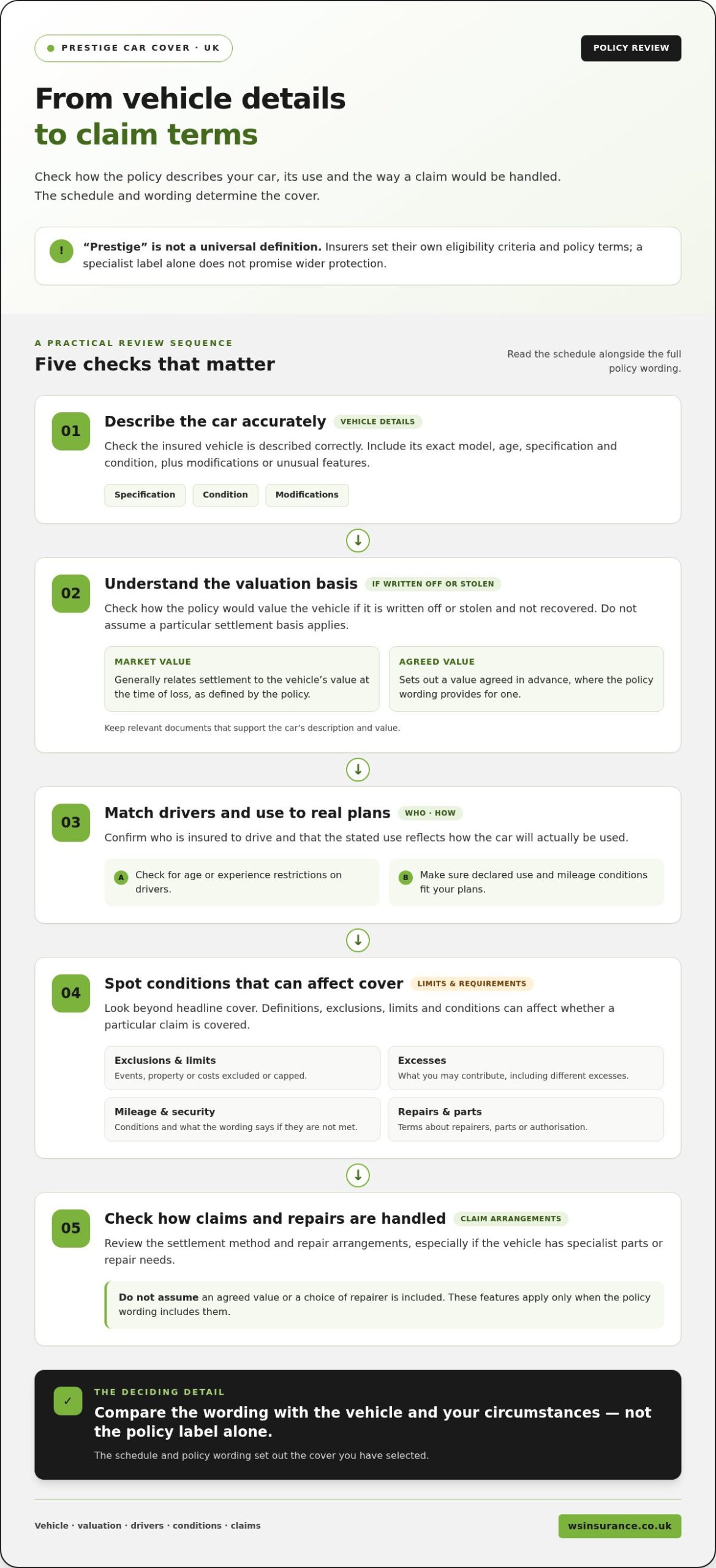
A useful policy review starts with the details that shape the risk and how a claim may be handled. For prestige car insurance uk, read the schedule alongside the full wording. Check that the insured vehicle, its permitted use and the drivers are described accurately. A policy may set limits or conditions that affect whether a particular claim is covered.
Policy headings alone don’t establish what a claim will pay. The operative details are in the definitions, exclusions, limits and settlement terms. GOV.UK provides general information on UK government vehicle insurance regulations. For your own policy, the schedule and wording explain the cover you’ve selected.
How is a prestige car’s value treated?
Check how the policy values the vehicle if it’s written off or stolen and not recovered. A market-value basis generally relates settlement to the vehicle’s value at the time of loss, as defined by the policy. An agreed-value arrangement, where the policy wording provides for one, sets out a value agreed in advance. Don’t assume either basis applies just because a policy is described as specialist.
Give a clear account of the car, including its exact model, age, specification, condition and any modifications. Keep relevant documents that support its description and value. Accurate information helps the insurer assess the vehicle as it is, rather than relying on an incomplete description.
Which policy terms deserve close attention?
Look beyond the headline cover and note any term that could change how or when protection applies. Pay particular attention to:
- Exclusions and limits: Identify events, property or costs the policy excludes or caps.
- Excesses: Check what you may need to contribute to a claim and whether different excesses apply in different circumstances.
- Drivers and use: Confirm who is insured to drive, whether age or experience restrictions apply, and that the stated use reflects your plans.
- Mileage and security: Look for annual mileage conditions and security requirements, including what the policy says happens if a condition isn’t met.
- Repairs and parts: Check the repair arrangements, including any terms about repairers, parts or authorisation.
These details matter in practice. If you use the car occasionally for pleasure, make sure the declared use and mileage conditions reflect that pattern. If it’s modified, provide a complete description and check how the wording addresses repairs involving those changes. Don’t treat a feature as included unless it appears in the selected policy’s terms.
WS Insurance Brokers provides personal advice on Private Motor Insurance. The firm is an independent intermediary authorised and regulated by the Financial Conduct Authority.
Prestige car insurance versus standard cover: how to compare
A “specialist” label doesn’t tell you on its own how a policy will respond to a claim. Nor does every prestige vehicle automatically need a specialist policy. Compare the actual cover for your car and its intended use against the terms set out in the documents.
Compare policy wording against the vehicle and your circumstances, not labels alone. Use the schedule and wording to review the same points across each option. This helps you identify meaningful differences without assuming standard cover is inadequate or specialist cover is automatically superior.
When might standard motor insurance be worth comparing?
Include standard cover in your comparison if the insurer’s criteria fit the car and the terms meet your needs. A prestige badge or high value doesn’t, by itself, determine suitability. Compare the settlement basis, driver and use restrictions, exclusions and claims arrangements in the actual documents. A policy with a familiar description may be a closer fit than one marketed as specialist. The wording is what matters.
When may a specialist assessment be useful?
A more detailed assessment may be useful if the vehicle has an unusual specification, a high value, limited availability or complex use. These factors make an accurate description and careful review of claims arrangements particularly important. An independent broker can consider your circumstances across a panel of leading and specialist insurers, then explain differences in policy features and exclusions. This doesn’t guarantee acceptance or a particular benefit, but it gives you a clearer basis for comparing prestige car insurance uk with your requirements.
How to prepare for a prestige car insurance discussion
Preparation makes it easier to explain what you need and compare the cover available. For prestige car insurance uk, follow four steps: identify the vehicle, gather its details, describe how you’ll use it, then compare the policy wording. The aim is to give a clear, accurate picture of the car and the risk.
- Identify the vehicle. Note its make, model, registration details and year, taking care to distinguish the exact model or variant.
- Document its specification. Record factory features, modifications and condition. Gather supporting valuation information if you have it, such as purchase or appraisal documents.
- Describe its use. Estimate the mileage, explain where it’s usually kept and say whether it’s used for pleasure, commuting or another purpose.
- Compare the wording. Once you have policy details, check that the same vehicle and use are being assessed and compare the terms side by side.
What vehicle and usage details should owners gather?
Be specific about features that could affect value or repairs, including non-standard parts or changes from the original specification. Describe expected mileage and where the car is kept, then identify who may drive it and the intended use. If your plans or the vehicle’s details change during the insurance discussion, update the information. Accurate declarations help insurers assess the risk and explain the applicable terms, reducing avoidable ambiguity.
How can owners compare quotations fairly?
Use the same declared details for each option, then compare the settlement basis, limits, excesses, exclusions and claims arrangements. A lower headline price or specialist label won’t show whether the terms suit your needs. Note differences in driver eligibility, permitted use or mileage conditions, and check how the policy addresses repairs and parts. For business-use vehicles, distinguish commercial motor requirements from personal cover, as this can affect which type of insurance is relevant.
Keep your notes and policy documents together so you can refer to the same facts throughout the comparison. You don’t need to have every question resolved before starting a discussion. A clear summary of the vehicle, its specification and intended use gives an adviser a practical basis for explaining options and policy terms.
WS Insurance Brokers is an independent intermediary offering personal advice on Private Motor Insurance from a panel of leading and specialist insurers. The firm is authorised and regulated by the Financial Conduct Authority. Find out about Private Motor Insurance.
How WS Insurance Brokers can help with prestige car insurance
Choosing cover for a valuable vehicle involves more than finding a policy with the right label. WS Insurance Brokers first takes time to understand your circumstances, then provides personal advice on Private Motor Insurance from a panel of leading and specialist insurers. As an independent intermediary, the firm can consider options across that panel rather than representing one insurer alone.
This approach brings the practical details into focus. The car’s specification, intended use and your insurance requirements all inform a recommendation. The aim is to help you understand how available policy terms relate to your needs, so you can make a considered decision about prestige car insurance uk.
What does independent broker advice involve?
Independent advice begins with a discussion about the vehicle and your circumstances. WS Insurance Brokers uses that information to explore relevant options across its panel, which includes AXA, Zurich, Allianz, Aviva, RSA and other leading and specialist insurers. The broker explains differences in policy features and exclusions, helping you compare the wording rather than rely on a product label. Recommendations are based on the information available and your requirements.
A broker acts as an intermediary, not as the insurer. The insurer sets the policy terms, while the broker helps you understand and consider options. The discussion can also cover fees and remuneration, so you have clear information about how the advice is provided. Each arrangement is considered on its own terms.
What should readers expect from WS Insurance Brokers?
Expect a personal discussion, clear explanations and support beyond the initial choice. The team has more than 15 years’ combined insurance experience and can explain key policy features, exclusions, fees and remuneration in accessible terms. WS Insurance Brokers is authorised and regulated by the Financial Conduct Authority.
If you need to make a claim, the broker also provides ongoing claims guidance. This can help you understand the process and relevant policy terms, while the insurer remains responsible for handling and deciding the claim. The response will depend on the policy wording and circumstances, so clear information from the outset is valuable.
Bring an accurate picture of the car and your requirements to the discussion, then review the available options and terms with a broker. Learn more about how WS Insurance Brokers can help.
Make your next cover decision with confidence
Turn what matters most about your car into a clear set of priorities. Decide which aspects of its value, use and claims arrangements you want to understand before choosing cover. This gives you a practical basis for discussing prestige car insurance uk and weighing up policy options without being led by a label alone.
Revisit the information for your cover if your circumstances change. A new modification, a different pattern of use or a change to the vehicle may make it sensible to update the details. Clear, timely communication keeps the discussion grounded in how you own and use the car.
WS Insurance Brokers can help you consider your requirements and discuss suitable Private Motor Insurance options. Discuss your vehicle and insurance needs with WS Insurance Brokers for personal advice from an independent intermediary.
Frequently Asked Questions
What is classed as a prestige car for insurance?
There’s no single UK-wide definition of a prestige car for insurance. An insurer may consider a vehicle’s value, performance, rarity and specification, so a high-end electric saloon or rare classic could be assessed differently by different insurers. The name on the bonnet alone doesn’t decide eligibility. Describe the particular vehicle accurately so its features can be assessed against the insurer’s criteria and policy terms.
Is prestige car insurance different from standard car insurance?
It can involve a different assessment or policy terms, but the distinction isn’t a guaranteed package of extra cover. For example, policies may use different settlement bases or set different driver restrictions. Compare the actual wording and schedule, not just the category or marketing description. A standard policy may suit a particular vehicle if its terms reflect the car and how you intend to use it.
Can I insure a prestige car on a standard policy?
Possibly, if the insurer accepts the vehicle and the policy terms suit your needs. For prestige car insurance uk, don’t assume a standard policy is unsuitable simply because the vehicle is valuable, or that a specialist label guarantees a better fit. Check that the vehicle is described correctly and that restrictions on drivers, use or mileage match your plans before relying on the cover.
Does prestige car insurance provide agreed value?
Not necessarily. An agreed-value basis applies only where the insurer offers it and the policy wording explains how it works. Other policies may settle a total loss using a different valuation method. Before choosing, check how the value is established, whether supporting documents are needed and what settlement the wording describes. Keep evidence of the vehicle’s specification and condition, especially if these affect its value.
Do modifications affect prestige car insurance?
Modifications can affect how an insurer assesses the vehicle and the terms it offers, so describe them accurately during the insurance discussion. A change to the engine, bodywork or interior, for example, could alter the car’s specification, value or repair requirements. Keep a record of what was changed and any relevant invoices. Don’t assume a modification is automatically covered or excluded; the policy documents explain how it’s treated.
What information should I have ready for a prestige car insurance quote?
Have the vehicle’s make, model, year, registration details and specification to hand, together with information about modifications and supporting valuation documents if available. Be ready to describe estimated mileage, where the car is kept, its intended use and who may drive it. These details help keep the assessment consistent. Provide relevant personal details through the appropriate insurance discussion rather than including sensitive information in a general checklist.
Can a broker help me compare prestige car insurance?
Yes. A broker can help you present your circumstances clearly and compare policy terms across relevant options, including differences that may be easy to miss in headline summaries. For a fair comparison, use the same vehicle and usage details for each option, then consider the settlement method, restrictions and claims arrangements. WS Insurance Brokers is an independent intermediary authorised and regulated by the Financial Conduct Authority, providing personal advice on Private Motor Insurance.