
A property can be insured for a substantial sum and still leave you facing a shortfall after a claim. If you’re wondering what is the average clause in property insurance, the key point is that an insurer may reduce a claim in proportion to how much the property is underinsured, even when the damage is only partial.
It’s understandable to expect your policy to cover a loss up to its stated limit. The calculation can be less straightforward, particularly if the figure on your policy reflects the property’s market value rather than its rebuilding cost. These are different measures, and using the wrong one can affect the amount you receive.
This guide explains how an average clause works, how insurers may calculate a reduced claim and why declared values matter. You’ll also learn which figures and policy terms to review, and how a broker can help you understand your cover and discuss it with greater confidence.
Key Takeaways
- Understand what is the average clause in property insurance and why underinsurance can affect even a partial-loss claim.
- See how the sum insured is compared with the relevant property value to calculate a potential reduction, before any excess is applied.
- Learn which figures and policy wording to review, including the basis used to value buildings cover.
- Use a practical review of declared values and property changes to help manage the risk of a claim shortfall.
- Find out how an independent broker can help interpret policy wording and review commercial property cover against your circumstances.
What is the average clause in property insurance, and why does it matter?
If your property is insured for less than the value specified by your policy, a claim could be reduced, even if the damage affects only part of the building. So, what is the average clause in property insurance? It’s a policy condition that may reduce a claim when the declared sum insured is below the relevant value of the insured property. Its effect depends on the policy wording and the circumstances of the claim, so it isn’t an identical or automatic rule across all policies.
Underinsurance is the gap between the cover declared and the value required by the policy; average is a possible adjustment to a claim because of that gap. The distinction matters: underinsurance describes a shortfall in cover, while average describes how that shortfall may affect a settlement. The Condition of average is also known as average or the condition of average in insurance terminology.
What does underinsurance mean for a property policy?
Underinsurance means the sum insured, the amount of cover declared for the property, is lower than the value the policy uses to assess whether the property is adequately insured. That value isn’t necessarily the property’s sale price or market value. Market value reflects what a property might sell for, whereas buildings cover commonly needs to reflect the cost of rebuilding or reinstating it, subject to the policy terms.
The difference can be easy to miss. A property’s location and land may affect its sale price, but those factors don’t necessarily represent the cost of reconstructing the building. The policy wording sets the relevant valuation basis. Check that basis before comparing it with the sum insured, rather than relying on a figure intended for a different purpose.
Does every property insurance policy use an average clause?
No single description applies to every policy. Terms can differ between insurers and types of cover, and the wording determines whether and how an average condition applies. In the schedule and wording, look for terms such as “average”, “condition of average” or “underinsurance”. Check which property or section of cover the wording relates to as well, because a policy can contain distinct terms for different types of loss.
For example, a building policy and a business interruption section may use different declared values and conditions. Don’t assume that finding an average clause means it applies to every claim, or that not seeing the exact phrase settles the matter. Read the relevant section alongside any definitions, conditions and claim provisions. If the wording is difficult to interpret, a broker can review it with you and explain how the declared value relates to the cover.
Understanding the clause is a practical first step, not a reason to assume a claim will be declined or reduced. The next question is how an insurer might calculate an adjustment when a policy’s conditions allow it.
How does the average clause calculation reduce a property claim?
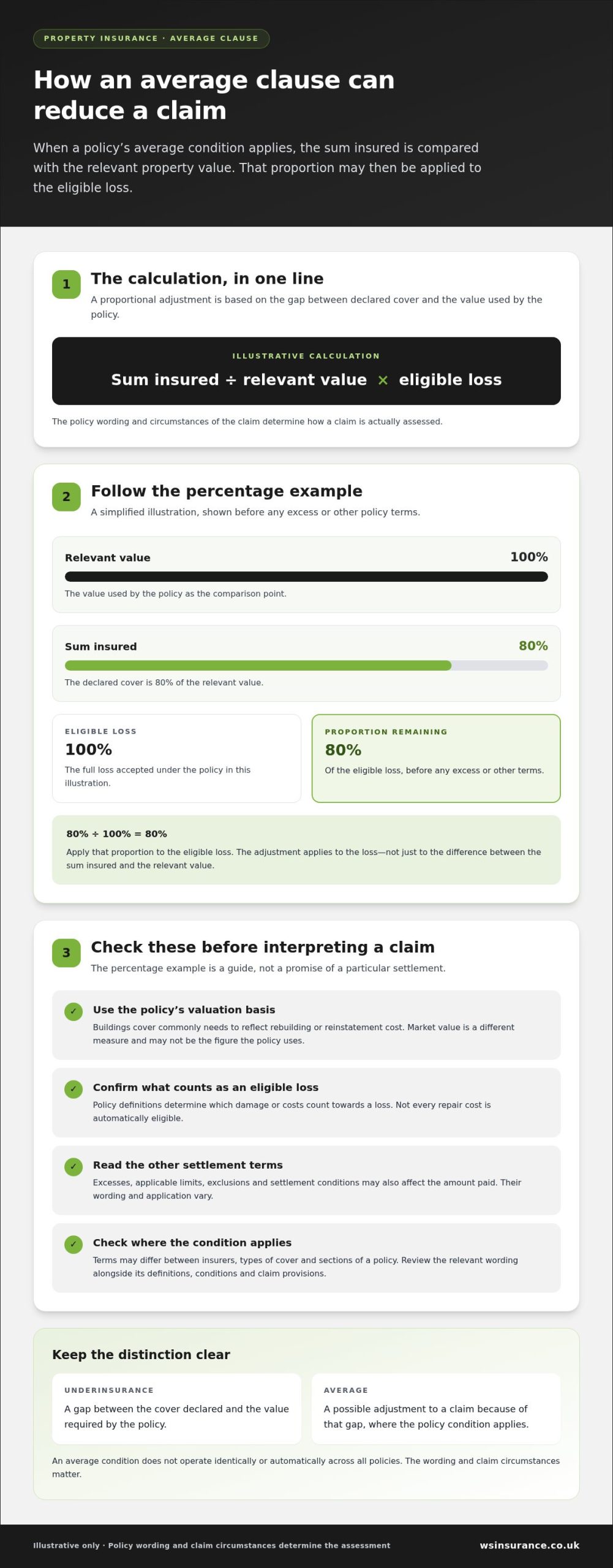
Where a policy’s average condition applies, the basic calculation compares the sum insured with the relevant value, then applies that proportion to the eligible loss. In other words, the insurer may reduce the claim by the same proportion as the underinsurance. As an illustration, divide the sum insured by the relevant value, then multiply the result by the eligible loss. The policy wording and claim circumstances determine how a claim is actually assessed.
This calculation is a guide, not a promise of a particular settlement. The amount paid can also depend on how the policy defines the property’s value, which parts of the loss are covered and what other terms apply. Lloyds Bank: What is underinsurance? also explains why a gap between cover and value can affect a claim.
How do you work through an average-clause example?
Consider this percentage-only illustration. It shows the proportional adjustment before any excess, using simplified inputs rather than predicting an insurer’s decision.
- Relevant value: 100% of the value used by the policy.
- Sum insured: 80% of that relevant value.
- Eligible loss: 100% of the loss accepted under the policy.
First, divide the sum insured by the relevant value: 80% ÷ 100% = 80%. Then apply that proportion to the eligible loss. On this simplified basis, 80% of the eligible loss would remain before any excess or other policy terms are considered. The proportion applies to the loss, not just to the difference between the sum insured and the relevant value.
That distinction can be surprising. A loss smaller than the sum insured may still be adjusted if the policy’s average condition applies. An excess is separate: it may affect the settlement as set out in the policy, and its operation shouldn’t be inferred from this illustration.
What can change the final claim settlement?
The example assumes the relevant value and eligible loss have already been agreed. In practice, policy definitions may specify how the property is valued and which costs or damage count towards a loss. The outcome can also be affected by the excess, applicable limits, exclusions and settlement conditions. Their wording and application vary, so the calculation alone can’t establish what an insurer will pay.
Check the schedule and the sections dealing with average, valuation and claims settlement. Confirm which figures are being compared and whether the stated loss is covered, rather than treating every repair cost as automatically eligible. If the figures or wording are unclear, WS Insurance Brokers can help review declared values alongside policy terms as part of its commercial property insurance advice. This can help you understand the basis of a calculation and prepare informed questions during a claim.
Which property value matters, and how is average different from an excess?
The relevant figure is the value basis set out in the policy, not automatically the property’s sale price or market value. For buildings cover, this commonly means an appropriate rebuild or reinstatement value, subject to the policy wording. Contents, professional fees or other property-related elements may also need to be considered if the policy includes them in its valuation basis.
The terms are easy to confuse, but they describe different things. This comparison clarifies what is the average clause in property insurance and how it differs from other figures used when a claim is assessed.
| Term | What it means |
|---|---|
| Average | A potential proportional adjustment to a claim where the insured value is below the value required by the policy. |
| Underinsurance | A shortfall between the declared sum insured and the relevant value used by the policy. |
| Excess | The amount or portion of a claim the policyholder bears under the policy terms. |
| Market value | The price a property might sell for, which may differ from the basis required for buildings cover. |
Why is market value not always the right buildings figure?
A property’s market price reflects factors that don’t necessarily determine the cost of reconstructing its buildings. The policy may instead require a figure based on reinstatement, with the precise basis set out in its wording. A suitable estimate can depend on property-specific details, such as its construction and features. There isn’t one universal valuation formula or figure that fits every property.
Review the wording to understand what the declared value is intended to include. Depending on the cover and its terms, relevant elements may extend beyond the building itself, such as contents or associated fees. WS Insurance Brokers’ commercial property insurance guide provides further context on arranging cover around a property’s circumstances.
How is average different from an insurance excess?
Average concerns the proportion of cover in relation to the relevant property value. An excess is a separate amount or portion borne by the policyholder under the policy. One relates to a possible underinsurance adjustment; the other is a claim term applied as the wording specifies.
For a simple comparison, imagine a covered loss where the declared value is below the policy’s required value. If average applies, the eligible loss may be reduced proportionally. An excess, by contrast, is applied according to its stated terms, rather than being calculated as the underinsurance proportion. Both can affect a settlement, and the order or method of applying them depends on the policy wording and claim circumstances. Review the valuation basis and excess separately so the two aren’t mistaken for the same deduction.
How can you reduce the risk of an average-clause shortfall?
Regularly reviewing declared values can help identify gaps before you need to make a claim. Knowing what is the average clause in property insurance is one part of that review. The practical step is to check that your figures still reflect the property and the valuation basis set out in the policy.
Work through the details in order:
- Check the sum insured. Note the amount shown in the current policy schedule and which buildings or property it relates to.
- Confirm the valuation basis. Read the wording to see what value the insurer expects you to declare and what the sum insured is intended to include.
- Compare it with available valuation information. Keep relevant reports and records together, and note when the information was prepared.
- Consider changes since the last review. Extensions, renovations, upgraded features or a change in how the property is used may alter its declared value or the information relevant to the policy.
- Review the policy wording. Look for terms addressing average, underinsurance, valuation and changes to the property or its use.
These checks don’t require you to assume a particular figure or use a universal valuation formula. They help you spot where the current schedule, the policy’s valuation basis and the property’s circumstances may no longer align. WS Insurance Brokers’ commercial property valuation guide offers further context on reviewing declared values. Keep the focus on the valuation basis your own policy specifies.
What should you review when checking your buildings sum insured?
Start by identifying which buildings and associated items the declared figure is meant to include. Compare that scope with the policy wording and the valuation information you hold. If the basis is unclear, the valuation is out of date or a material property change has occurred, treat it as a prompt for a structured review rather than relying on an old figure by default.
Keep the policy schedule, wording, valuation information and records of relevant property work together. Dated documents make it easier to understand why a value was declared and what has changed since then. They also give you a clearer starting point for discussing the cover.
What should you do if you think a claim may be affected?
Read the relevant policy wording and any explanation the insurer has provided about its calculation. Gather the schedule, valuation evidence and claim correspondence so you can compare the figures with the stated basis. A broker can help interpret the cover and support communication during claims handling, so you can raise focused questions about how the terms have been applied.
If you’d like help reviewing declared property values against your policy wording, discuss your commercial property insurance with WS Insurance Brokers.
How can a broker help you understand an average clause?
If you’re asking what is the average clause in property insurance, understanding the definition is only the first step. A broker can help you see how the wording relates to your declared values, the property’s circumstances and the cover arranged. That review can make a complex policy easier to discuss, both before a claim and if a question arises during one.
An independent broker can examine the policy schedule and wording alongside the information used to arrange cover. They can identify relevant average or underinsurance provisions, explain what they may mean in practice and highlight where the declared value or valuation basis needs closer attention. The aim is clarity, not a prediction of how an insurer will decide a claim.
What can a broker clarify before a claim?
A useful review looks at the documents together, rather than treating the sum insured as an isolated figure. The schedule shows the declared values and sections of cover; property information and available valuation evidence help explain how those figures were reached. The wording sets out the relevant conditions. A broker can help you understand how these pieces fit together and identify questions to resolve as part of policy management.
This can be particularly helpful if the property has changed, the declared value is based on older information or a policy term is unclear. A broker can explain the potential implications of relevant wording and help you raise focused questions. They can’t override the insurer’s policy terms or guarantee a claim settlement, but a clearer understanding can help you make informed decisions about your cover.
How can WS Insurance Brokers help with property cover?
WS Insurance Brokers is an independent UK broker that assesses client risks and sources tailored commercial property cover from major UK insurers. Its advice can be shaped around the property and your circumstances, rather than relying on a generic explanation of average. Reviewing declared values alongside the wording can help bring potential gaps or uncertainties into view.
Support continues after cover is arranged. Policy administration helps keep cover details organised, while claims advocacy provides practical support during claims handling. If a claim raises questions about an average condition, a broker can help you understand the policy language and support communication about how it has been applied. The insurer remains responsible for assessing the claim under the policy, so no broker can promise a particular outcome.
Clear information makes it easier to discuss your options without guesswork. For a considered review of your commercial property cover, Discuss your commercial property insurance with WS Insurance Brokers.
Make your next policy review count
Set aside time to check whether your property information and declared values still reflect your circumstances. Keep the relevant documents together and note any questions you want answered. This gives you a clear starting point for a practical conversation, rather than waiting until a claim makes the wording feel urgent.
Understanding what is the average clause in property insurance can help you approach that review with greater confidence, but the details of your own cover matter most. WS Insurance Brokers is an independent UK insurance brokerage, authorised and regulated by the Financial Conduct Authority. Its team provides tailored commercial property insurance advice, policy administration and support during claims handling, helping you make sense of the cover without promising a particular outcome.
To discuss your property cover and the wording that applies to it, Discuss your commercial property insurance with WS Insurance Brokers. A considered review can help you feel better prepared for the decisions ahead.
Frequently Asked Questions
What is the average clause in property insurance?
It’s a policy condition that can reduce a claim proportionally if the insured amount is below the value required by the policy. The adjustment may apply to a partial loss as well as extensive damage, depending on the wording and circumstances. Underinsurance is the shortfall in declared cover; average is the potential effect of that shortfall on a claim. Check the specific policy rather than assuming the condition works identically across all policies.
How is the average clause calculated on a property insurance claim?
Where the wording applies, the common illustrative calculation is the sum insured divided by the relevant value, multiplied by the eligible loss. Before relying on a figure, establish what value the policy uses and what costs make up the accepted loss. The calculation is only a guide: definitions, excesses, limits and other policy terms can affect the settlement. Ask for the basis of the calculation if it isn’t clear.
Does an average clause apply to every property insurance policy?
No. Policy wording and conditions differ, and whether an average clause applies depends on the cover and claim circumstances. Search the schedule and wording for “average”, “condition of average” or “underinsurance”, then read any related definitions and claim conditions. If the term isn’t obvious, that alone doesn’t determine how a claim would be handled. A broker can help interpret the relevant wording in context.
What happens if my property is underinsured?
If a policy’s average condition applies, the insurer may reduce an eligible claim in proportion to the underinsurance, rather than simply paying the full loss up to the sum insured. The outcome depends on the policy terms and how the insurer assesses the relevant value and loss. If you discover a possible shortfall before a claim, review the declared figure and discuss an appropriate update to your cover.
Is market value the right amount to insure a commercial property for?
Not necessarily. Market value reflects what a property might sell for, whereas buildings cover commonly uses a rebuild or reinstatement basis specified in the policy. For commercial premises, the appropriate figure depends on the property and the wording, so a sale valuation may not answer the insurance question. Also consider whether the policy treats contents, stock, fees or other items separately from the building.
Can I challenge an average-clause reduction to a claim?
You can ask the insurer to explain its decision and review whether the calculation follows the policy wording. Request a clear breakdown of the value used, the loss assessed and the steps taken to reach the proposed settlement. Compare this with your schedule and supporting valuation or property records. If something appears inconsistent, provide relevant evidence and ask for the point to be reconsidered; a broker can support communication.
How can I avoid an average-clause reduction?
You can’t control how a future claim is assessed, but regular reviews can help reduce the risk of a shortfall. Check that the declared value uses the basis required by the policy, and revisit it after building work, extensions or changes in use. Keep valuation evidence, policy documents and records of alterations together. If you’re uncertain whether the figures remain suitable, arrange a review before renewal or a material change.