
Could the jewellery you design, the pieces you keep and the stock you hold for your business all need different protection? For designers exploring high net worth jewellery insurance uk, the answer depends on who owns each item, how it is used and where it is kept. Personal valuables may call for a different approach from business stock, materials, samples and pieces held for clients.
Before arranging cover, gather clear information about values, storage, travel and the way your business operates. These details can affect which policy limits, exclusions and claims requirements matter. Comparing them can feel complex, particularly when personal and commercial risks overlap.
This guide explains the jewellery-related exposures to consider and how to assess protection for your personal belongings and business property. You’ll learn what to compare in policy wording, which working practices and locations to include, and what records to prepare, such as valuations and proof of ownership. A clear picture of your needs makes it easier to discuss relevant cover.
Key Takeaways
- Separate jewellery you own personally from business stock, materials, tools and items held for others, so each exposure can be considered appropriately.
- Assess high net worth jewellery insurance uk against how items are used and where they’re kept, alongside the policy’s limits, exclusions and claims requirements.
- Use an inventory to organise information about ownership, values, locations and supporting records before comparing cover.
- Update your records when you acquire, sell or commission pieces, or change how your design business operates.
- An independent broker can assess personal and commercial needs and source tailored options from a panel of UK insurers.
Why high net worth jewellery insurance matters to jewellery designers
For a jewellery designer, a piece might be a treasured personal possession, a finished product awaiting sale or a commission entrusted by a client. Those different roles matter when considering protection. Personal valuables cover relates to items you own and use personally; business insurance addresses property and activities connected with your work. Separating the two helps you describe your risks clearly instead of treating every piece as part of one collection.
High net worth jewellery insurance is a way of arranging cover around valuable items and the circumstances in which they’re owned, kept and used. The label alone doesn’t explain what a policy covers. As with how insurance works, protection depends on the contract: the policy wording sets out covered events, conditions, limits and exclusions. For designers, useful questions include who owns each item, where it is stored and whether it travels for work.
Which jewellery and related property may need consideration?
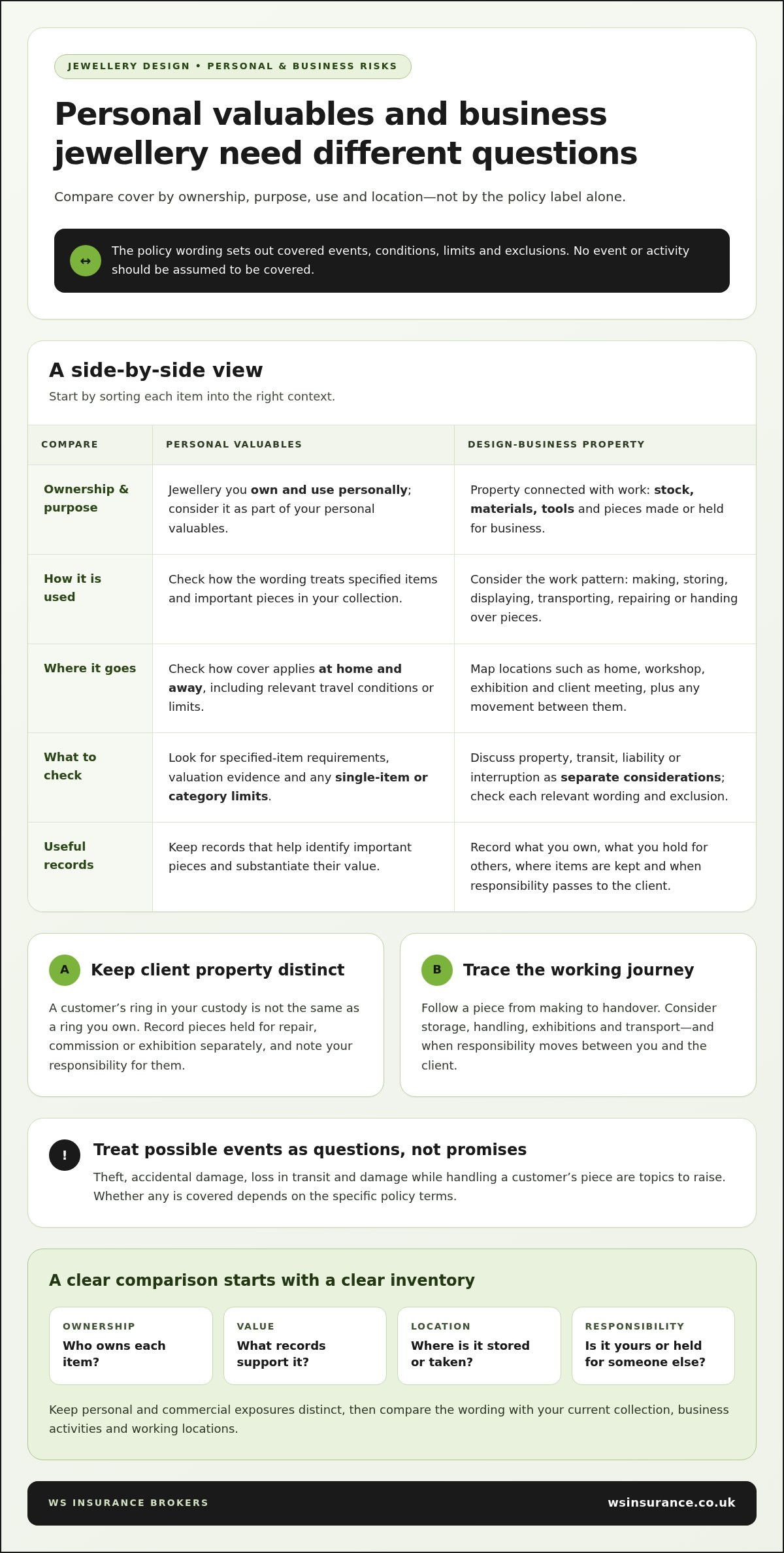
Start by separating your personal collection from pieces held for sale, repair, commission or exhibition. A client’s ring in your custody isn’t the same as a ring you own, even if both are kept in your studio. Create separate records for tools, materials and other business property. Ownership and custody can affect which exposure needs to be discussed and what evidence may help identify an item if there’s a claim.
Consider your full working pattern, not just what is kept at your usual premises. Jewellery might move between home, a workshop, an exhibition or a client meeting. The relevance of each location and activity depends on the policy terms. Consider high net worth jewellery insurance uk alongside your business exposures rather than assuming one policy covers every item connected with your work.
Why a standard home policy may not answer every business need
Household cover and business insurance serve different purposes. Their terms may treat stock, tools, business use and items away from home differently. A home policy might be relevant to personal valuables, but don’t assume it also addresses jewellery held for sale or work-related activity. Compare the wording with what you own, what you’re responsible for and where items are kept or taken.
For a clearer view of how personal property protection fits into wider household arrangements, read our high net worth home insurance guide. Keeping personal and commercial exposures distinct gives you a more useful basis for comparing cover and discussing your needs with an independent broker.
How jewellery insurance fits personal valuables and design-business risks
To assess high net worth jewellery insurance uk, group property by ownership and purpose, then consider the activities and locations connected with it. Household jewellery, business stock, tools and materials may involve different exposures. Give pieces belonging to clients or held temporarily separate attention. Custody doesn’t make them your property, but you may still need to discuss your responsibility for them.
There isn’t one automatic answer for every designer. Policy wording determines which events are covered, where protection applies, what conditions you must meet and which exclusions may affect a claim. Theft, accidental damage, loss in transit or damage while handling a customer’s piece are useful topics to raise, but none should be assumed to be included. The FCA’s Consumer Duty provides regulatory context for considering customer outcomes; the specific scope of cover remains a matter of the policy terms.
Personal jewellery and high-value household contents
For jewellery you own personally, check how the policy treats specified items, valuation evidence and any single-item or category limits. Keep records that help identify and substantiate the value of important pieces. Read how the wording applies at home and away, including any conditions or limits relevant to travel. For more on household protection, see our high net worth home insurance guidance.
Business stock, tools and customer property
Map your work from making a piece to handing it over. Consider where stock and materials are stored, how tools are used, whether jewellery is displayed at exhibitions and how items are transported. Separate stock you own from a customer’s jewellery in for repair or a commission. Note when responsibility passes between you and the client. These distinctions make discussions about property, custody and business activities more precise.
Commercial insurance can involve different areas of risk, and a policy for one exposure shouldn’t be assumed to cover another. Depending on your work, discuss property, transit, liability or interruption as separate considerations, then examine the relevant wording and exclusions. Our UK business insurance guide explores the wider picture. WS Insurance Brokers can assess your insurance needs and source tailored options from a panel of UK insurers. Explore independent insurance guidance as you consider how personal and business protection fit together.
How to compare high net worth jewellery insurance for your circumstances
Compare cover with the way you actually own, use and store jewellery, rather than relying on a policy label or headline price. The wording defines the cover. For high net worth jewellery insurance uk, make sure the information used to arrange protection reflects your current collection, business activities and working locations.
A comparison table can help you identify gaps and questions to resolve when reviewing cover:
| What to record | What to compare |
|---|---|
| Item type and ownership | Personal jewellery, stock, tools, materials or property belonging to a client |
| Location | Home, business premises, exhibition venue or time in transit |
| Activity | Personal wear, making, storage, display, delivery or repair |
| Evidence | Declared values and available invoices, photographs, descriptions or valuations |
| Policy wording | Limits, excesses, exclusions, security conditions and claims requirements |
Which policy details deserve close attention?
Read the schedule and wording together. Check whether limits or sub-limits apply to individual items, categories, business stock or property away from your premises. Note conditions about storage, security, transit or the activities you carry out. An excess affects the amount you may need to contribute towards a claim, while exclusions describe situations the policy doesn’t cover. Check the claims requirements too: understand what records or steps the wording calls for and whether they fit your normal processes.
Be candid and precise when describing your circumstances. If you begin displaying work at events or take on repairs, for example, those activities may change the risks to consider. An option that appears less expensive may not fit as well if its limits, conditions or exclusions don’t align with your needs.
How should designers assess valuation and replacement evidence?
For each valuable item, note how its value was established and keep supporting records together. Depending on the item, useful evidence may include an invoice, a clear photograph, a detailed description or a professional valuation. Update the information as pieces are acquired, altered or sold. The National Association of Jewellers provides information about valuers through its Institute of Registered Valuers. A valuation can support your records, but it doesn’t determine how a claim will be settled. Check the policy wording for the applicable claims process and settlement basis.
What to prepare before arranging jewellery insurance
Clear records make it easier to explain what you own, what your business handles and how each item is used. Before exploring high net worth jewellery insurance uk, work through five steps: list the property, establish ownership, record values, map locations and activities, then review the relevant policy wording. This gives an insurer or broker a more accurate picture of your circumstances and can help make later claims discussions clearer.
Create a useful jewellery and business-property inventory
Use a spreadsheet or another secure record-keeping system, with separate categories for personal pieces, business stock, customer property, tools and materials. For each item or group, note its description, owner, estimated value and usual storage location. Add photographs and supporting documents where available, such as receipts, invoices or valuations. Record when items are displayed, transported or worked on, as well as where they are usually kept.
Take particular care with ownership. A piece made for sale, an item in for repair and a customer commission may all be in your possession, but they don’t have the same owner. Label records clearly so you can distinguish your own property from items you’re temporarily responsible for.
Review changes and keep records accessible
An inventory is most useful when it reflects your current collection and working practices. Update it after acquisitions, sales and commissions, and when your business changes how it makes, stores, displays or transports jewellery. Revisit declared values so the information used in policy discussions keeps pace with significant changes to your property.
Keep copies of relevant valuations, receipts, photographs and policy documents in a secure, accessible place. Documentation requirements vary by insurer and policy, so treat an inventory as useful preparation rather than a universal checklist. Check the wording for the records and claims information that apply to your cover.
Taking stock of your jewellery and business property can also reveal wider exposures worth considering. Our guide to identifying business risks to insure against can help you review those alongside your inventory. WS Insurance Brokers can help organise your personal and commercial insurance needs: discuss your requirements with WS Insurance Brokers.
Arrange jewellery insurance with clear, independent guidance
Before comparing terms, bring the key facts together: who owns each piece, what activities involve it, its value and where it’s kept or taken. Keep personal valuables distinct from business stock, tools, materials and customer property. This gives an adviser a clearer view of risks connected with your design work and helps focus the discussion on relevant policy terms.
What working with an independent broker can involve
WS Insurance Brokers is an independent insurance brokerage. The team can assess your personal and commercial insurance needs, then source tailored options from a panel of UK insurers. Sharing an inventory and a straightforward description of your work helps frame the search. Making pieces in a home studio, displaying stock at events or accepting customer items for repair may each prompt different questions about limits, exclusions, locations and policy conditions.
WS Insurance Brokers also provides policy administration and claims advocacy. This support can help you navigate the process and communicate with the insurer, but it doesn’t guarantee a particular decision or settlement. Read the policy documents carefully so you understand the cover arranged and any conditions that apply.
A straightforward next step for jewellery designers
Prepare an up-to-date inventory and a short summary of your business activities. Include where you work, store or display jewellery, how items are transported and whether you handle property belonging to customers. Review personal valuables and business exposures separately, then consider how the relevant policy terms fit each one. This organised starting point helps focus a discussion and bring unanswered questions into view.
For high net worth jewellery insurance uk, clear, independent guidance can help you compare relevant options without losing sight of the details that matter to your circumstances. If you’re ready to discuss your situation, discuss your insurance requirements with WS Insurance Brokers.
Tailored insurance starts with an accurate picture of the risk.
Take the next step towards clearer jewellery protection
For designers, arranging cover starts with understanding what you own, what your business handles and where jewellery is kept or taken. Keep personal valuables separate from business stock, tools and customer property, then compare policy limits, exclusions, conditions and claims requirements against your actual activities. An organised inventory can make those discussions more focused.
WS Insurance Brokers is an independent UK brokerage, founded in 2012 and authorised and regulated by the Financial Conduct Authority. With access to a panel of UK insurers, the team can assess your needs and source relevant options. Policy management and claims advocacy can also help you navigate insurance processes, without promising a particular claim outcome. For high net worth jewellery insurance uk, clear guidance can help you approach the choices with greater confidence.
Discuss your jewellery and business insurance needs with WS Insurance Brokers. A considered review is a practical step towards protection that reflects how you work and what matters to you.
Frequently Asked Questions
Is high net worth jewellery insurance suitable for jewellery designers?
It may be relevant if you own valuable personal jewellery, but business stock, tools and customer property raise separate insurance considerations. The right arrangement depends on ownership, where items are kept and how your business operates. Before discussing high net worth jewellery insurance uk, distinguish personal possessions from commercial exposures and consider how each item is used. Review the policy wording carefully, as cover depends on its terms, conditions and exclusions.
Can home insurance cover jewellery used in a design business?
A home policy may address personal contents, but business use, stock, tools and customer property can be treated differently or subject to limits and conditions. Don’t assume an item connected with your work is automatically covered as a personal possession. Describe your activities and ownership clearly, then compare the policy wording with your circumstances. For instance, jewellery you wear personally may need consideration separately from a client’s piece kept at home for repair.
What information should jewellery designers prepare when arranging insurance?
Prepare an inventory with item descriptions, ownership, estimated values, photographs and available receipts or valuations. Record business stock, tools, materials and customer property separately, and note where items are stored, displayed or transported. Include a clear description of the work you undertake, such as making, repairs or commissions. This information can make discussions more precise. Insurers and policies may request different evidence, so treat the inventory as useful preparation, not a universal checklist.
Does jewellery insurance cover items while they are being transported?
Transport cover depends on the policy wording. Check any territorial limits, security conditions, exclusions, and item or category limits that may apply. Read how the wording treats jewellery carried between your home, workshop, exhibitions or customers. Cover at a fixed location doesn’t automatically mean cover extends to transit. Keeping a record of where items travel and the activities involved can help you explain your working practices when reviewing the risk and comparing policy terms.
How often should jewellery designers review insured values?
Review values when you acquire or sell significant pieces, complete commissions, change stock levels or alter how items are stored and transported. The valuation method and supporting evidence relevant to an item depend on the policy. Keep your inventory current and retain documents such as receipts and valuations. Updated records can make discussions clearer, but don’t guarantee a particular claim settlement. Check the policy wording for any specific valuation, notification or documentation requirements that apply to your cover.
What happens if a jewellery insurance claim is made?
The insurer assesses a claim against the policy wording, the information declared, available evidence and the circumstances of the loss. The policy sets out relevant notification steps, documentation requirements and any applicable excess. Keep records relating to the item and follow the stated process promptly. WS Insurance Brokers provides claims advocacy to help clients navigate the process, but the insurer makes decisions in line with the policy terms. No particular claim outcome or settlement can be guaranteed.