
What if the insurance you rely on as a director doesn’t respond when a lender calls in your personal guarantee? Signing a guarantee can create personal contractual exposure, and directors’ and officers’ (D&O) insurance isn’t automatically a safety net for that debt. Understanding the difference is central to assessing directors personal liability insurance uk and the risks you actually face.
It’s easy to expect one policy to cover every personal risk connected with running a company. In practice, personal guarantee insurance and D&O cover address different exposures: one may respond to a qualifying guarantee being called in, while the other is designed for claims alleging wrongful acts in your management role. The exact scope depends on the policy wording and terms.
This 2026 UK guide explains how the covers differ and what to examine before making a decision, including limits, exclusions, eligibility criteria and claim conditions. It also sets out practical steps for reviewing your circumstances and policy wording so you can assess whether your directors’ protection fits your needs.
Key Takeaways
- A personal guarantee can expose you to contractual liability, but the extent depends on the agreement’s terms.
- Directors personal liability insurance uk can refer to different types of protection. D&O cover isn’t automatically a substitute for guarantee-related cover.
- Check how the policy defines covered events and claim triggers before relying on it if a lender calls in a guarantee.
- Use the guarantee document, borrower details and your role as a starting point when assessing eligibility, limits, excesses, waiting periods and exclusions.
- Reviewing your circumstances alongside the policy wording can clarify how directors’ protection fits with your wider business cover.
What does directors personal liability insurance mean in the UK?
A company’s debts are generally its own obligations. A director doesn’t automatically become personally responsible for them simply by holding office. However, personal liability can arise in particular circumstances, such as when a director signs a personal guarantee or faces a claim connected with their conduct as a director.
Personal guarantee insurance may protect a director against some financial loss if a business lender calls on a personal guarantee, subject to the policy’s terms, eligibility requirements and claim triggers. The protection depends on the specific wording. The phrase directors personal liability insurance uk can therefore refer to different concerns rather than one standard policy.
What does a director’s personal guarantee commit them to?
Signing a personal guarantee may create a contractual obligation to meet specified company commitments if the agreement’s conditions are met. The wording sets out what is guaranteed, when the commitment may be enforced and whether it has a defined scope. The circumstances surrounding a lender’s demand may also be relevant. Because interpreting an agreement has legal consequences, seek independent legal advice about its terms before relying on a general explanation.
Is personal guarantee insurance the same as directors’ liability insurance?
No. Personal guarantee insurance concerns exposure under a guarantee, while Directors’ and Officers’ (D&O) insurance generally addresses claims alleging wrongful acts in a director’s management role, subject to its terms. D&O is separate protection, and its presence shouldn’t be taken to mean a personal guarantee is covered. For a neutral overview of Directors and Officers (D&O) liability insurance, see the linked background reference.
A policy name alone cannot establish what is covered. The wording, definitions and conditions determine the scope of protection. When assessing directors personal liability insurance uk, first identify whether your concern is a lender’s demand under a guarantee, a claim about your decisions as a director, or both.
A practical starting point
Read the guarantee and insurance wording together. Check who and what each document refers to, which events may trigger a response, and what limitations apply. Personal guarantee insurance terms, eligibility criteria and triggers vary between insurers, so don’t assume a policy will meet a particular demand without reviewing its wording.
This guide provides general information only. It isn’t legal or financial advice and can’t replace advice based on your agreement, circumstances and policy documents.
How personal guarantee insurance may respond when a guarantee is called in
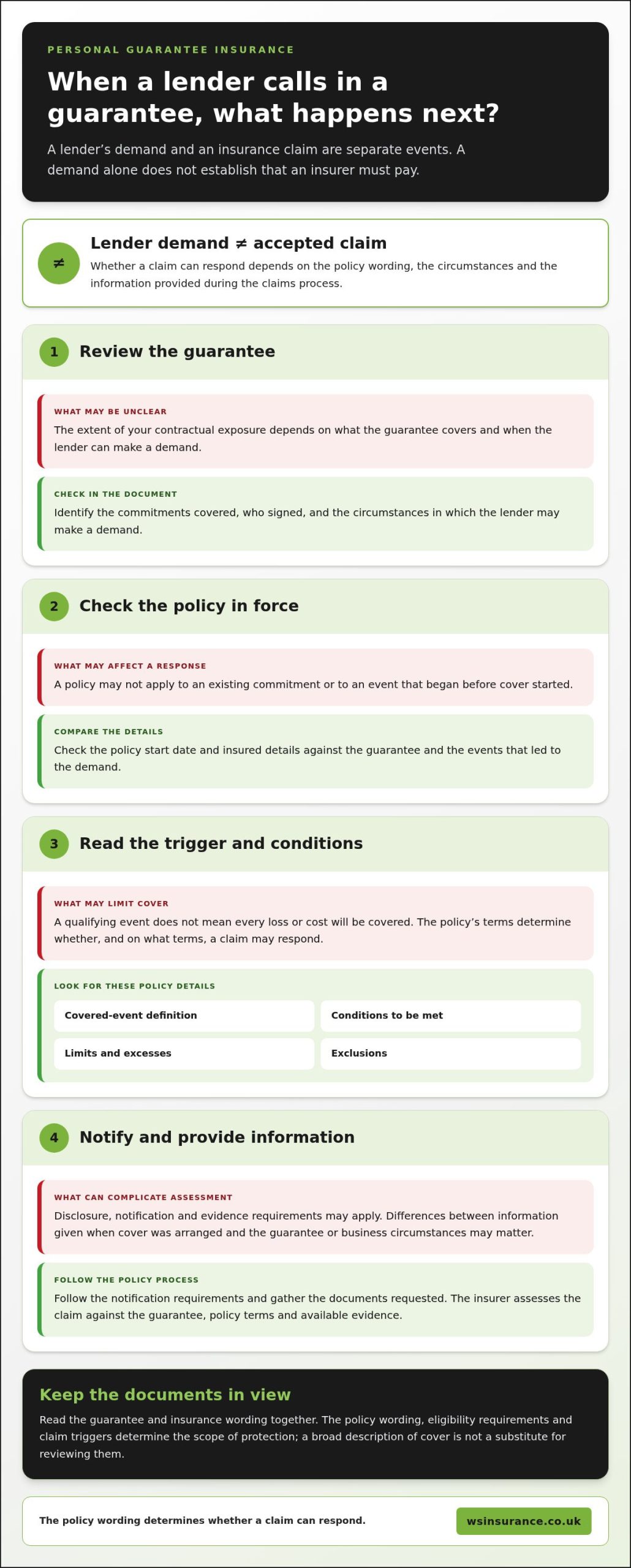
A lender’s demand under a personal guarantee and an insurance claim are separate events. The demand brings the guarantee’s terms into focus, but it doesn’t by itself establish that an insurer must pay. Any response depends on the policy, the circumstances and the information provided during the claims process.
The policy wording determines whether a claim can respond and on what terms. Use these steps to review the key documents and conditions:
- Review the guarantee. Identify the commitments covered, who signed and the circumstances in which the lender can make a demand. The document defines the contractual exposure.
- Check the policy in force. Compare its start date and insured details with the guarantee and the events that led to the demand. Don’t assume a policy applies to an existing commitment or an event that began before cover started.
- Read the trigger and conditions. Find the policy’s definition of a covered event, any conditions that must be met, and how limits, excesses and exclusions may affect a claim.
- Notify and provide information as required. Follow the policy’s notification process and gather the documents it requests. The insurer assesses the claim against the guarantee, policy terms and available evidence.
What events and costs might a policy address?
Personal guarantee insurance may address some financial exposure arising when a qualifying guarantee is called in. The covered event and any costs considered are specific to the policy, so don’t rely on a broad description of cover instead of reading the wording. Limits, excesses, conditions and exclusions can all affect the amount, if any, that may be payable. A business failure or lender demand alone doesn’t guarantee that a claim will be accepted.
What can affect a personal guarantee insurance claim?
The guarantee’s scope, the policy start date and the circumstances surrounding the commitment may all be relevant. Policy terms may also set requirements for disclosure, notification and supporting evidence. Differences between the details provided when cover was arranged and the guarantee or business circumstances may matter to the insurer’s assessment.
The Companies Act 2006 separately addresses directors’ liability and company indemnities. It doesn’t determine whether a personal guarantee insurance claim is covered. That question depends on the relevant contract and policy wording. Reviewing your wider directors personal liability insurance uk needs can help bring the documents and potential exposures into clearer focus. Review your directors’ protection needs with WS Insurance Brokers.
Personal guarantee insurance vs D&O insurance: what is the difference?
Personal guarantee insurance and Directors’ and Officers’ (D&O) insurance address different exposures. A guarantee is a contractual commitment to a lender; D&O cover commonly relates to claims alleging a wrongful act in a director’s management role. Each policy’s wording determines its scope, so don’t assume that having D&O insurance means a personal guarantee is covered.
The phrase directors personal liability insurance uk can refer to more than one protection need. This comparison highlights the difference, but the policy documents remain decisive.
| Comparison | Personal guarantee insurance | D&O insurance |
|---|---|---|
| Purpose | May address specified financial exposure under a personal guarantee, subject to the policy. | May respond to claims alleging wrongful acts connected with a director’s role, subject to the policy. |
| Typical subject matter | A lender’s demand under a guarantee given in connection with company borrowing. | Allegations about decisions or conduct in managing or overseeing the company. |
| Insured interests | The director’s exposure under the guarantee, as defined by the wording. | Insured directors and other persons defined in the policy, and the interests or costs specified there. |
| Wording dependence | Eligibility, covered triggers, limits, exclusions and conditions vary. | Definitions, insured persons, limits, exclusions and conditions vary. |
Which risks are usually considered under D&O insurance?
D&O insurance is designed around potential claims arising from management decisions or alleged failures in a director’s duties. Depending on the wording, it may address legal defence costs, settlements or regulatory investigation expenses. These aren’t automatic benefits: definitions, exclusions, limits and the persons insured differ between policies, and a particular claim may fall outside cover. Read the schedule and full wording together to understand the protection provided.
Why a personal guarantee needs its own wording check
A guarantee is a contractual promise, not automatically a management-liability claim. For example, a lender could call on a guarantee while a separate allegation concerns a director’s decisions during the company’s financial difficulties. The events may arise from the same business circumstances, but that doesn’t make the policies interchangeable or mean either will respond.
Assess the guarantee-related wording alongside the D&O policy. Focus on what each defines as covered and how exclusions or limits may apply. A careful review of your directors personal liability insurance uk needs can clarify where the protections differ and what remains uncertain.
How to assess personal guarantee insurance before making a decision
Start with the exposure itself, then compare it with the policy wording. A useful review considers the guarantee document, the borrowing it relates to and your role in the arrangement, rather than relying on a general description of cover. Eligibility, limits and claim conditions can differ between policies, so don’t assume standard terms.
Director’s assessment checklist
- Read the guarantee. Note what commitments it covers, who signed it and whether the agreement sets out a defined scope or conditions.
- Identify the borrower and borrowing. Gather relevant loan or facility information and match it to the guarantee, including any later changes.
- Clarify your role. Record whether you signed personally, in what capacity and when. Keep details of any other signatories.
- Check eligibility and insured amount. Compare the policy’s eligibility criteria and stated insured amount with the guarantee and your circumstances. Don’t assume the full guaranteed amount is insured.
- Review financial terms. Check the applicable limit and any excess, and whether a waiting period applies. Consider how these provisions could affect a claim.
- Look for exclusions and conditions. Identify circumstances that may restrict cover, along with claim notification and evidence requirements.
- Check timing and changes. Establish whether the policy addresses an existing guarantee or only commitments made after cover begins. Review how changes to the guarantee or underlying borrowing are treated.
Which policy details deserve close attention?
Read the definitions and covered events alongside the exclusions, conditions and claims process. A summary may help orient you, but it doesn’t replace the insurer’s wording, which sets out the contract. Pay particular attention to what you must disclose, how and when a claim must be notified, and what evidence is required. If the borrowing or guarantee changes, the policy wording determines whether that affects the cover.
What information helps you assess your exposure?
Bring the signed guarantee together with relevant borrowing documents and information about the company’s circumstances. Make a clear record of who signed, when the guarantee was given and any amendments made afterwards. This helps an insurance review compare the exposure with eligibility requirements and policy terms. For questions about enforceability or your legal obligations, seek independent legal advice.
A wider review of directors personal liability insurance uk should consider how guarantee-related exposure sits alongside other business risks. WS Insurance Brokers can assess directors’ protection needs against your circumstances and policy wording. Review your directors’ protection needs, and consider how this fits with a broader 2026 guide to identifying business risks to insure against.
Reviewing directors’ protection with WS Insurance Brokers
Start by identifying the exposure created by the guarantee, then read the relevant insurance wording against it. Directors’ and Officers’ (D&O) Insurance and personal guarantee insurance address different concerns, so don’t assume either covers the other. Reviewing them alongside your wider business protection can help identify where cover may respond, where terms restrict it and what questions need resolving.
WS Insurance Brokers is an independent UK insurance brokerage, authorised and regulated by the Financial Conduct Authority. Its tailored approach considers your circumstances and policy wording when reviewing directors’ protection needs. D&O Insurance is among its business insurance offerings, but that doesn’t automatically mean a personal guarantee is covered.
How a broker review can bring policy differences into focus
A broker can consider the guarantee, your role, the company’s circumstances and existing insurance arrangements together. WS Insurance Brokers has access to major UK insurers and provides tailored insurance placement, helping bring relevant policy options and terms into focus. The aim is to support an informed assessment, not to promise that a particular claim will be accepted or paid.
Support can also include policy administration, such as adjustments, and claims advocacy. These brokerage services can help with policy management and the claims process, while the insurer assesses any claim under the policy terms. A measured review can make the distinctions clearer and support an informed decision.
A clear next step for directors
Before a review, gather the signed guarantee and any amendments, relevant borrowing information, and current insurance schedules or policy documents. Note who signed and when, what has changed since, and what you want to understand about D&O cover, guarantee exposure and other business risks. This preparation gives the discussion a practical starting point.
For broader context, you can also explore a UK business insurance guide and an insurance brokers guide. The right questions depend on your circumstances and policy wording. To review how your cover fits together, discuss your directors’ protection needs with WS Insurance Brokers.
Take a clearer view of your directors’ protection
A personal guarantee creates a distinct contractual exposure, while D&O insurance generally addresses claims connected with a director’s management role. A policy name doesn’t settle whether it responds. Check its wording, eligibility, limits and exclusions against your circumstances. That’s the practical starting point for assessing directors personal liability insurance uk and deciding whether your protection needs closer review.
WS Insurance Brokers is an independent, FCA-authorised UK brokerage with access to major insurers. It offers Directors & Officers Insurance, alongside policy management and claims support, to help directors review their wider protection needs without assuming a particular claim outcome.
Discuss your directors’ protection needs with WS Insurance Brokers. With the relevant documents and questions to hand, you can take the next step with greater clarity.
Frequently Asked Questions
Does directors and officers insurance cover a personal guarantee?
Don’t assume that D&O insurance covers a personal guarantee. D&O cover commonly relates to claims alleging wrongful acts in a director’s management role, while a guarantee is a contractual commitment to a lender. The policy wording decides what is covered, including definitions, exclusions and conditions. If you have both types of exposure, review the guarantee and each policy separately to understand how their terms apply.
What does personal guarantee insurance cover in the UK?
Personal guarantee insurance may cover some financial exposure if a qualifying business guarantee is called in, subject to the insurer’s terms. The policy defines which guarantees, events and insured people are eligible, and whether particular circumstances are excluded. Limits, excesses and other conditions may affect any claim. Don’t rely on the product name or a broad description of cover alone. Read the policy wording against the specific guarantee and borrowing arrangement.
Can a director insure an existing personal guarantee?
Eligibility for an existing guarantee depends on the insurer and policy terms. Some wording may distinguish guarantees already in place from commitments made after cover begins, and may set conditions based on the guarantee or borrowing. Check the policy start date, eligibility criteria and relevant exclusions against the signed agreement. If you’re unsure what the guarantee legally commits you to, seek independent legal advice before relying on insurance.
When does personal guarantee insurance pay out?
A policy may respond only when its defined claim trigger and conditions are met. A lender’s demand isn’t, by itself, confirmation that an insurer will accept a claim. The insurer assesses the circumstances against the guarantee and policy wording, including any notification and evidence requirements. The outcome depends on the terms, exclusions and applicable limit. Notify the insurer as required by the policy and retain relevant correspondence and documents.
Does personal guarantee insurance cover the full amount owed?
Not necessarily. The amount potentially covered depends on the policy’s insured amount, limit, excess, any co-insurance or other applicable terms, and whether the claim is accepted. The lender’s demand and the insurer’s assessment are separate matters, so don’t assume the policy will meet the full guaranteed sum or every related liability. Compare the guarantee amount with the policy schedule and wording to understand any gap in protection.
Can a lender call in a personal guarantee if a company fails?
A company’s failure doesn’t automatically establish that a lender can enforce every personal guarantee. Whether a lender can make a demand depends on the agreement’s wording, the circumstances and whether the stated conditions have been met. Read the signed document carefully, as guarantees can differ in scope and terms. For advice about enforceability or your personal legal obligations, consult an independent solicitor familiar with the agreement and circumstances.
What should I check before buying personal guarantee insurance?
Start with the guarantee, the borrower and your role, then compare them with the policy’s eligibility criteria and insured amount. Check limits, excesses, waiting periods where applicable, exclusions, claim triggers and notification or evidence requirements. Find out how the wording treats existing guarantees and later changes to the borrowing. When assessing directors personal liability insurance uk, focus on the documents themselves rather than assumptions based on a policy name.