
The policy with the biggest cover limit may still leave a personal trainer exposed if its wording doesn’t include the activity or venue where they work. Choosing liability insurance for personal trainers is less about finding a generic package and more about matching cover to how, where and whom you train.
It can be difficult to know whether public liability, professional indemnity or both are relevant. The right fit depends on your services, working arrangements and the terms an insurer is prepared to offer. A policy that suits a trainer working one-to-one in a gym may not automatically fit someone who runs group sessions, trains clients outdoors or provides online coaching.
This 2026 UK guide explains the main cover types to consider and what to disclose about your activities, venues and clients. It also sets out practical checks for comparing limits, excesses and exclusions. If the wording or suitability isn’t clear, an independent broker can help you understand available insurer terms and discuss options for your work.
Key Takeaways
- Liability insurance for personal trainers should reflect the activities you provide, the clients you train and the places you work.
- Public liability and professional indemnity address different types of claims. Check the wording to understand where each may apply.
- Compare limits, excesses, exclusions and claims conditions, not just headline benefits.
- Prepare details of your work status, training activities, venues, qualifications and client groups before seeking quotations.
- Gather venue contracts and existing policy documents so you can check requirements and identify potential gaps before choosing cover.
Liability Insurance for Personal Trainers: What Protection Can It Provide?
Liability insurance may respond to specified claims made against you in connection with your work, subject to the policy’s terms, limits and exclusions. It isn’t a general promise to pay whenever an incident occurs. Whether a claim is covered depends on the circumstances and the wording of the policy.
For personal trainers, suitability depends on the work you actually do. One-to-one coaching, group classes, online instruction and specialist training activities may be treated differently by insurers. Your client groups, venues and working arrangements can also affect which terms are available.
Requirements vary between employers, gyms, leisure centres and other venues. A contract may specify particular cover or evidence of insurance. Check each requirement directly, then compare it with the policy wording and schedule. Don’t assume that a policy meets every condition simply because it includes liability cover. There isn’t one combination of covers that automatically suits every trainer.
What does public liability insurance mean for a personal trainer?
Public liability insurance typically concerns third-party claims alleging injury or damage to property in connection with your training activities. For example, a client might be injured during an in-person session and allege that your actions contributed to the injury. The policy wording determines whether the circumstances fall within cover.
An incident alone doesn’t mean a claim will be covered. The insurer will consider the facts, the allegations and the policy terms, including any relevant exclusions and conditions.
When might professional indemnity insurance be relevant?
Professional indemnity may be relevant if a client alleges that negligent advice, instruction or another professional service caused them harm or loss. For instance, a client could allege that a training plan or guidance was unsuitable and led to an injury. This differs from a public liability claim focused on an incident during a session or damage to property. The Professional Indemnity Insurance overview provides useful background, but your own policy wording is what matters.
Some trainers may need to consider both types of cover, depending on their services and any employer, venue or contractual conditions. Others may have different needs. When assessing liability insurance for personal trainers, describe your activities accurately and check that the insurer’s terms address the work you intend to do. Availability and suitability remain subject to insurer assessment.
Public Liability and Professional Indemnity: Compare the Covers
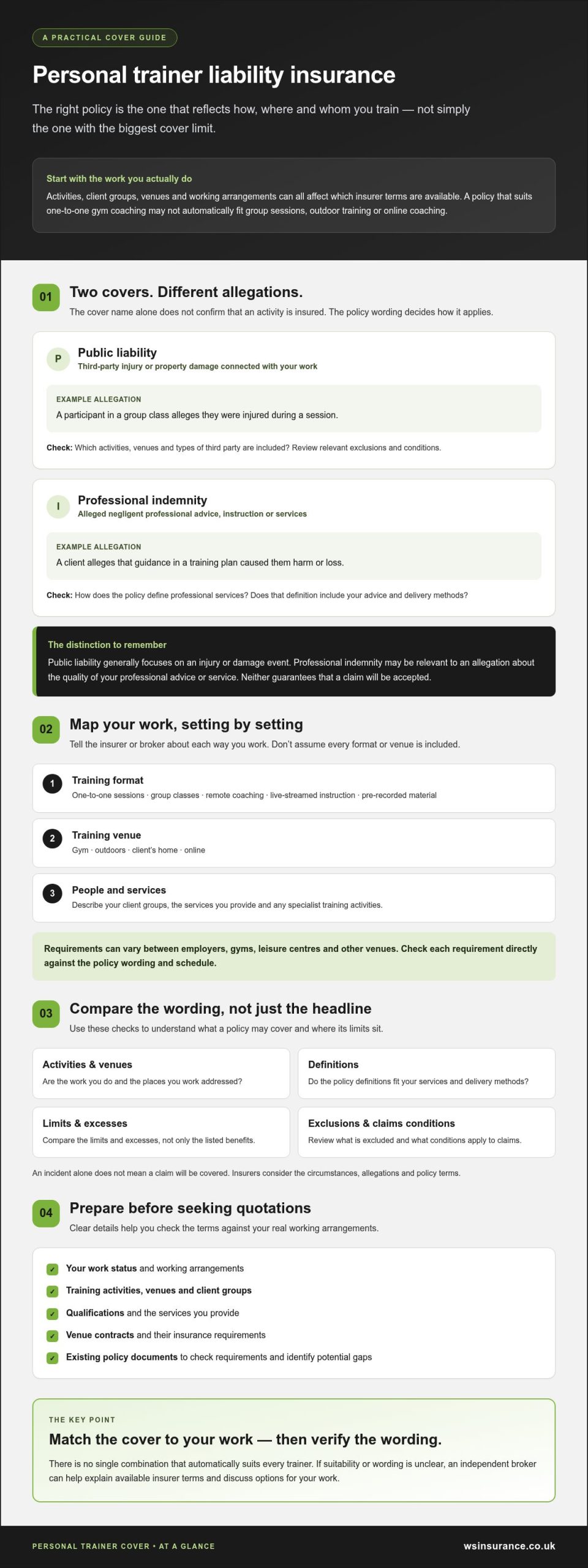
These covers address different kinds of allegations, so comparing their purpose can help you decide what to check. Neither name alone confirms that a particular activity is insured. Definitions, limits, exclusions and conditions depend on the individual policy wording.
| Cover | Usual purpose | Example claim | Wording checks |
|---|---|---|---|
| Public liability | Third-party claims alleging injury or property damage connected with your work. | A participant in a group class alleges they were injured during a session. | Check which activities, venues and types of third party are included, and review relevant exclusions. |
| Professional indemnity | Claims alleging negligent professional advice, instruction or services. | A client alleges that guidance in a training plan caused them harm or loss. | Check how the policy defines professional services, and whether your advice and delivery methods fall within that definition. |
In general, public liability concerns an injury or damage event, while professional indemnity may be relevant to an allegation about the quality of your professional advice or service. That distinction doesn’t guarantee that a claim will be accepted. Insurers assess the circumstances against the policy terms.
Which cover fits in-person, group and online training?
List each way you work separately. One-to-one sessions, group classes and remote coaching may raise different wording questions. Tell the insurer or broker about the client types and settings involved, including whether you train in a gym, outdoors, at a client’s home or online. Don’t assume remote sessions, live-streamed instruction or pre-recorded material are included. Ask how the wording treats each format.
If you’re a CIMSPA member, review the CIMSPA Code of Conduct for its expectations around appropriate insurance. Check the current code and your own membership circumstances rather than assuming the same requirement applies to every trainer.
Do employees, contractors or venue agreements change what to check?
They can. Your business structure and actual working arrangements may affect who is responsible for arranging cover. A contract describing someone as a contractor doesn’t, by itself, settle what obligations apply. If you engage staff, check current UK employers’ liability rules against your circumstances and seek appropriate advice if their status is unclear.
Read venue agreements for any specified cover, limits or evidence requirements. These can vary, so confirm them with each venue and compare them with the policy schedule and wording. If you want to discuss whether public liability or professional indemnity options may fit your training work, speak with WS Insurance Brokers. Availability is subject to insurer terms and assessment.
How to Compare Personal Trainer Liability Insurance Policies
A useful like-for-like comparison starts with an accurate picture of your work, not the headline benefits on a policy summary. Use this process to check whether the wording fits your needs:
- List every training activity. Include regular and occasional services, then check each against the insurer’s description of covered work.
- Record where and how you work. Note your venues and working arrangements, including any activities delivered remotely.
- Compare the cover limits. A limit is the most the insurer will pay for a covered claim, subject to the policy terms. Check whether it applies per claim, in total over the policy period or in another way.
- Check the excess. This is the amount you may have to contribute towards a claim. Confirm how it applies and whether different sections have different excesses.
- Read exclusions and claims conditions. Check what isn’t covered, what you must do if an incident occurs and any notification requirements or time limits.
- Compare the full terms, not just the premium. A lower premium doesn’t establish that a policy is suitable. Consider how its scope, exclusions and conditions match your work.
Which activities, venues and clients should you disclose?
Use examples such as one-to-one sessions, group classes, online coaching, home visits and specialist sessions to make your activity list thorough. Also disclose your venues, client groups, qualifications and any additional services. If you’re unsure whether an activity or client category falls within the insurer’s description, ask for clarification in writing before relying on the cover.
How should you assess limits, excesses and exclusions?
Don’t compare limits in isolation. Check what each limit applies to, whether it is shared across claims and how it relates to any contractual requirements. There’s no single figure that suits every trainer, so compare the requirements of your venues or clients with the policy wording.
Look for exclusions concerning activities, equipment, advice, subcontractors and the circumstances in which a claim is made. Ask whether legal defence costs are included within a limit, covered separately or subject to particular conditions. These details can affect how a policy responds.
Before choosing liability insurance for personal trainers, review the covered activities, limits, excesses, exclusions, claims conditions and treatment of legal defence costs. If any point remains unclear, ask the insurer or broker to explain how it applies to your work before you proceed.
What Personal Trainers Should Prepare Before Arranging Cover
A clear account of your work helps an insurer assess what cover may be suitable. Before requesting quotations for liability insurance for personal trainers, gather the details and documents that explain how your business operates. Accurate disclosures can reduce misunderstandings about which activities, venues or working arrangements were presented for assessment.
What information helps an insurer assess your training work?
Use this checklist to organise the information you may need:
- Work status: note whether you’re self-employed, employed, subcontracted or working through a business.
- Activities and services: describe each type of training and any additional service you provide.
- Venues and delivery: list where you work and how sessions are delivered, including any remote training.
- Qualifications: record relevant qualifications and any details the insurer asks you to provide.
- Client groups: identify the types of clients you train, including any groups with distinct needs.
- Existing insurance and claims: gather current policy documents and details of your claims history if requested.
Also collect venue contracts and any other agreements that set insurance conditions. Having these to hand makes it easier to compare requested cover or evidence with the terms being offered. For wider context on business protection, see this business insurance guide.
Include occasional as well as regular activities, and don’t leave out a venue or client group because you’re unsure whether it matters. If a detail changes later, such as adding a service or working in a new setting, ask whether the insurer needs to reassess the cover. Keep written answers and policy documents together for reference.
When can a broker help clarify suitable options?
A broker can discuss your requirements, help clarify which details to disclose and compare terms from insurers it can access. WS Insurance Brokers is an independent, FCA-authorised and regulated brokerage with access to major UK insurers. Whether an insurer can consider your activities, and on what terms, depends on its assessment. Availability, acceptance, exclusions and conditions aren’t guaranteed.
Once you’ve gathered your checklist, contracts and existing documents, you can discuss your insurance requirements with WS Insurance Brokers. A clear account of your work gives the conversation a practical starting point without assuming in advance which cover will be available or suitable.
Arrange Personal Trainer Liability Insurance with Confidence
A sound decision starts by matching cover to the work you actually do, then checking that the policy wording and any contractual requirements line up. Liability insurance for personal trainers isn’t a standard fit for every business, so treat the insurer’s assessment and the policy documents as essential parts of the process.
The steps are distinct:
- Enquiry: explain your work, venues, clients and working arrangements, and share any requirements set by a gym, employer or other contracting party.
- Insurer assessment: the insurer considers the information and decides whether it can offer terms. Availability, acceptance and cover are subject to its assessment.
- Policy review: before proceeding, read the schedule and wording. Check they reflect the activities disclosed and understand the limits, excesses, exclusions and conditions.
- Renewal review: revisit your cover before renewal, and tell the insurer about relevant changes to your work rather than relying on last year’s details.
What should you confirm before accepting a policy?
Check that the documents accurately record your insured activities, venues and client groups, along with the limits, excesses, exclusions and policy dates. Compare these details with any evidence requirements from gyms, employers, clients or other contracting parties. Requirements differ, so confirm what each party expects rather than assuming one policy meets them all.
If an important point remains unclear, ask the insurer or broker for a written explanation before proceeding. Keep the response with your policy documents so you have a clear reference if you need to check the scope of cover later.
Keep the schedule, full wording and any written clarifications somewhere accessible. If you add a service, change venues, begin working with a different client group or alter your business arrangements, contact the insurer to check whether the cover needs review. At renewal, confirm that the details still describe your current work.
How can WS Insurance Brokers support your next step?
WS Insurance Brokers is an independent, FCA-authorised and regulated UK brokerage. It can discuss your requirements and approach available insurers, drawing on access to major UK insurers to help clarify and compare terms. Whether an insurer can consider your activities, and on what terms, depends on its assessment. WS also provides policy administration and claims support, without guaranteeing the outcome of any claim.
If you’re ready to review your requirements, discuss your liability cover options with WS Insurance Brokers. A considered conversation can help you understand the next steps without assuming a particular policy or outcome in advance.
Choose Cover That Fits the Way You Train
The right liability insurance for personal trainers depends on your actual work, not just a policy title or headline limit. Public liability and professional indemnity address different types of allegations, so consider which may be relevant to your services. Disclose your activities, client groups and venues, then check the wording, exclusions, excesses and any requirements in your contracts.
Before accepting a policy, make sure its documents reflect the information you provided and confirm any unclear points in writing. Revisit your cover if your services or working arrangements change, and check the details again at renewal.
WS Insurance Brokers is an independent UK insurance brokerage with access to major UK insurers, and is authorised and regulated by the Financial Conduct Authority. Its support includes policy administration and dedicated claims support. Suitability and availability remain subject to insurer terms and assessment.
If you’d like a considered discussion about your requirements, discuss your personal training insurance requirements. With the right details prepared, you can take the next step with greater clarity and confidence.
Frequently Asked Questions
Is liability insurance compulsory for personal trainers in the UK?
There’s no general legal requirement for a self-employed personal trainer to hold public liability or professional indemnity insurance. However, a gym, employer, professional body or contract may set its own insurance conditions, so check what applies to your work. If you employ staff, employers’ liability insurance is generally a legal requirement. Requirements depend on your circumstances, so verify them before starting work or changing your arrangements.
What is the difference between public liability and professional indemnity insurance for personal trainers?
Public liability typically relates to third-party claims alleging injury or property damage connected with your training work. Professional indemnity may be relevant if a client alleges that negligent advice, instruction or another professional service caused harm or loss. For example, an injury during a session may raise a public liability question, while an allegation about an unsuitable training plan may involve professional indemnity. The policy wording determines whether either responds.
Does personal trainer liability insurance cover online coaching?
It may, but don’t assume online coaching is included. Cover depends on the insurer’s terms and how the policy defines your activities and professional services. Disclose whether you provide live remote sessions, pre-recorded programmes, written plans or other online instruction, and ask the insurer or broker to confirm how each is treated. Check the policy documents for relevant exclusions, conditions or restrictions before relying on cover for remote work.
Am I covered by a gym if I work as a self-employed personal trainer?
Not necessarily. A gym may have its own insurance, but that doesn’t confirm that its policy covers your liability as a self-employed trainer. Check your agreement with the gym, ask who is responsible for arranging cover and request details of any insurance requirements. Then confirm your own policy addresses the work you do there. Don’t rely on a verbal assumption. Check the contract and relevant policy documents.
Do personal trainers need employers’ liability insurance if they hire staff?
Generally, yes. UK employers’ liability rules require businesses that employ staff to hold this insurance, including where staff work part-time. Whether someone is legally an employee can depend on the working arrangement, not just the label used in a contract. Check current official guidance against your business structure and circumstances, particularly if you engage people as contractors. Public liability or professional indemnity cover isn’t a substitute for employers’ liability insurance.
What activities should I disclose when arranging personal trainer insurance?
Disclose every service and training format you provide, not just your main activity. This could include one-to-one sessions, group classes, online coaching, home visits or specialist training. Also explain where you work, the client groups you train, your qualifications, any additional services and relevant subcontracting arrangements. Include occasional work too. If you’re unsure whether an activity is included, ask the insurer or broker for written clarification.
Can one liability policy cover personal training at home, in a gym and outdoors?
It may be possible, but cover for multiple locations depends on the insurer’s terms and the activities you disclose. Tell the insurer whether you train at clients’ homes, in a gym, outdoors or through remote sessions, and ask whether each setting is covered. Check for location or activity restrictions in the policy wording, and compare the terms with any requirements in your venue or client agreements before beginning work.