
Would you be prepared if your firm was hit by the 85% increase in claims severity currently impacting the construction sector? For many, the search for professional indemnity for architects and engineers has become a source of significant anxiety as premiums climb and policy wording grows more opaque. You likely feel that insurance should be a straightforward shield for your reputation, yet the reality often involves a mountain of administrative burden and restrictive collateral warranties that seem designed to slow you down. It is a constant challenge to satisfy ARB or Engineering Council requirements while trying to keep your practice assets secure.
We believe that securing your professional future shouldn’t feel like a gamble. This 2026 guide offers the expert guidance you need to navigate these complexities and move from uncertainty to total clarity. We’ll show you how to manage the hardening market to protect your personal assets from negligence claims and secure a policy that facilitates winning larger, more complex contracts. By the end of this article, you’ll understand how a specialist, independent approach removes the doubt from your renewal process and ensures your practice remains both compliant and competitive. Trusted advice. Proven protection.
Key Takeaways
- Understand why standard business insurance is insufficient for design professionals and how specialist cover protects against complex negligence claims.
- Master the legal nuances between “Reasonable Skill and Care” and “Fitness for Purpose” clauses to avoid unintended liability gaps in your contracts.
- Learn why choosing “Any One Claim” cover is often essential for professional indemnity for architects and engineers to meet regulatory and contractual standards.
- Discover how to present your practice’s risk profile effectively to underwriters to secure bespoke protection and more favourable terms.
- Recognise the strategic advantage of using an independent broker to access the full breadth of the UK insurance market for unbiased advice.
Professional Indemnity for Architects and Engineers: Why Specialist Cover is Crucial in 2026
Professional liability insurance, commonly known as professional indemnity (PI), is the essential safeguard for design professionals against allegations of negligence, errors, or omissions. While standard business insurance focuses on physical risks like fire or theft, it doesn’t address the financial repercussions of professional advice or design work. In the current 2026 landscape, professional indemnity for architects and engineers acts as a critical shield. It protects your reputation when a client claims that a design flaw or a missed detail has led to a significant financial loss. Trusted advice in this area is not just a luxury; it’s a necessity for practice survival.
Professional bodies like the ARB, RIBA, and the Engineering Council mandate specific levels of cover to ensure you maintain your professional standing. This isn’t just about compliance; it’s about the integrity of the profession. As the UK construction sector faces increasing scrutiny and evolving liability standards, your insurance must keep pace with these changes. A specialist policy ensures that you aren’t left exposed by generic wording that fails to account for the specific technical risks you face every day. We position ourselves as a steady hand to help you navigate these shifting regulatory waters.
Regulatory Compliance vs. Commercial Reality
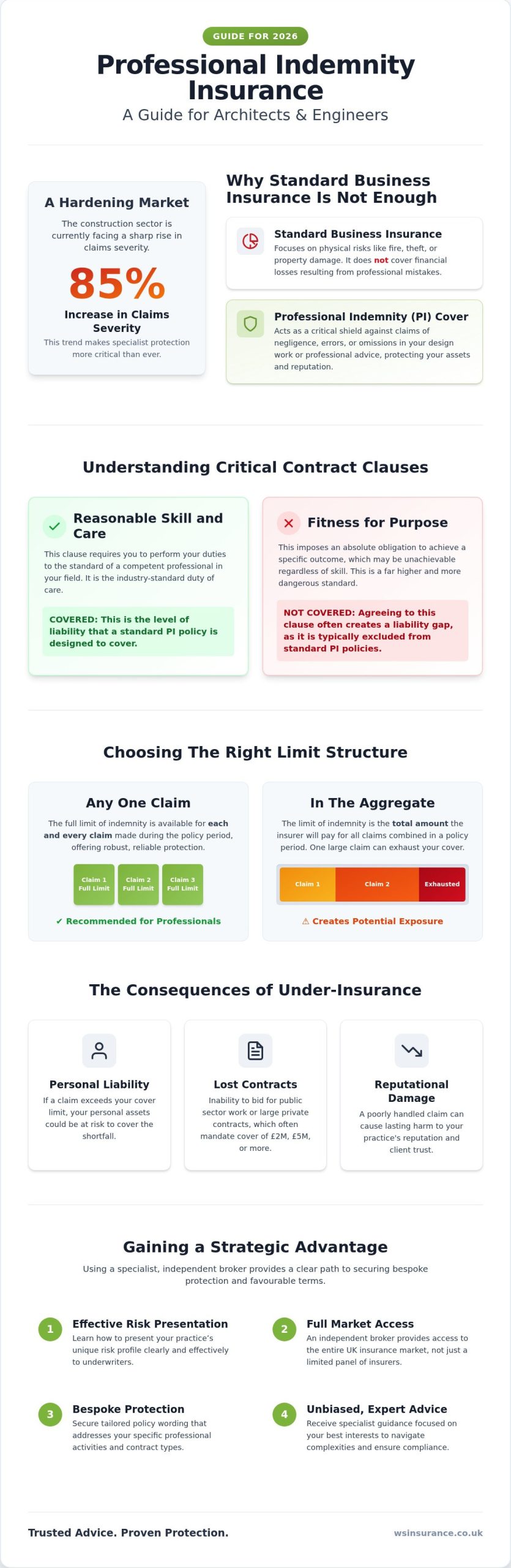
Understanding the minimum requirements set by your professional body is the starting point, not the destination. While the ARB provides a baseline for registration, commercial clients often mandate much higher limits before awarding contracts. It’s common to see project requirements for £2 million or £5 million in cover, even if your regulator only requires a fraction of that. You must also consider the structure of your limit. An “Each and Every Claim” policy is typically preferred over an “Aggregate” limit. It provides the full sum insured for every individual claim made during the year, removing the fear that one large claim will exhaust your protection for future incidents.
The Consequences of Under-Insurance
A common misconception persists that professional indemnity for architects and engineers only triggers during catastrophic structural failures. While “total collapse” scenarios are certainly covered, they represent a tiny fraction of modern claims. Most disputes arise from far more mundane but expensive issues like specification errors, project delays, or a failure to coordinate effectively with sub-consultants. These are the daily business risks to insure against throughout a project’s lifecycle. To ensure the broadest possible protection, you should look for “Civil Liability” wording. Unlike more restrictive “negligent act, error or omission” policies, civil liability cover triggers for any claim that isn’t specifically excluded, acting as a far more robust safety net for your practice.
The distinction between “Reasonable Skill and Care” and “Fitness for Purpose” is perhaps the most dangerous trap in design contracts. Standard PI policies cover you for failing to act with the skill expected of a competent professional. However, “Fitness for Purpose” clauses create an absolute obligation to achieve a specific result, regardless of negligence. Signing such a clause often means you are operating without insurance for that specific liability. It’s a risk that can lead to personal financial ruin.
The Complexity of Collateral Warranties
Developers and funders frequently demand collateral warranties to create a direct legal link between themselves and the design team. These documents often contain hidden obligations that extend your liability far beyond your original appointment. If a warranty is poorly drafted, it can inadvertently void your insurance cover entirely. This is why having a specialist insurance broker review these clauses before you sign is vital. We act as your shield, ensuring that your contractual promises remain within the scope of your policy’s protection.
Emerging Risks in 2026: Sustainability and Digital Twins
In 2026, the liability landscape is expanding into digital and environmental spheres. Greenwashing claims are a growing concern. If a building fails to meet its promised energy performance targets, the design team may be held responsible for the increased operational costs. Similarly, Building Information Modelling (BIM) and digital twins create shared data environments where design errors can propagate quickly. These digital risks mean that professional indemnity for architects and engineers must be more dynamic than ever before. If you are concerned about how these technologies impact your liability, it’s worth having a confidential discussion with an advisor to review your current limits.
The Case for “Any One Claim” Basis
Most professional bodies, such as the ARB and RIBA, strongly prefer or mandate an “Any One Claim” basis for indemnity. This format ensures that the full limit is available for every separate claim made during the year. In contrast, an “Aggregate” policy provides a single pot of money for the entire period. If your practice suffers several smaller losses early in the year, an aggregate limit could be exhausted, leaving you completely exposed for a major claim later on. The “Any One Claim” structure provides a cleaner, more secure path for meeting project-specific requirements, giving both you and your clients peace of mind that the protection won’t run dry.
The Role of Excess and “Inner Limits”
Your excess is the initial amount you must pay toward any claim, and it serves as a lever to manage your premium costs. Balancing a higher excess to reduce your annual outlay is a common strategy, yet you must ensure it remains within your practice’s financial resilience. We often see firms over-extend their excess to save on costs, only to find a single claim causes a significant cash flow crisis. You should also stay vigilant regarding “inner limits” or restricted cover for high-risk areas like asbestos or fire safety. These specific risks may have lower sub-limits than your main policy, so reviewing these details with an independent advisor is the best way to remove uncertainty and ensure your shield remains intact across all areas of your work.
How to Organise Your Professional Indemnity Presentation for Underwriters
In the eyes of an underwriter, your practice isn’t just a name; it’s a risk profile they’re looking to purchase. Simply filling out a standard renewal form is often insufficient to secure the most competitive rates. To achieve the best results, you must proactively sell the quality of your practice. Think of this process as a professional pitch where you demonstrate that your firm is a lower risk than your peers. Managing your professional indemnity for architects and engineers alongside other core protections, such as your commercial property insurance, allows for a holistic view of your practice’s security. This integrated approach signals to insurers that you take a methodical, disciplined approach to risk across the board.
The Essential Underwriting Checklist
Underwriters need more than just numbers to feel confident. A comprehensive presentation should include a detailed project list that breaks down fees and total project values. This provides a clear picture of your exposure when seeking professional indemnity for architects and engineers. Don’t overlook the value of technical expertise. Including CVs for your principals and key technical staff highlights the depth of experience within your team. If your firm maintains internal quality control procedures, such as ISO 9001 certification, make sure this is front and centre. It proves that you have a proactive risk management culture that reduces the likelihood of errors occurring in the first place.
Addressing Claims History with Transparency
Past claims or “circumstances” don’t have to be a deal-breaker. The key is transparency. Trying to obscure a previous issue is the fastest way to lose an underwriter’s trust and may even lead to a policy being declared void. Instead, explain the situation clearly and, more importantly, demonstrate the lessons learned. Show the underwriter exactly what steps you’ve taken to ensure the same mistake can’t happen again. By proving that you’ve mitigated the risk, you turn a past negative into a demonstration of your firm’s integrity and resilience. This level of honesty builds a narrative of partnership with your insurer. If you’re ready to improve your market presentation, you can request a bespoke risk review from our specialist team.
Securing Bespoke Protection with an Independent Broker
Securing professional indemnity for architects and engineers is not a simple transaction; it’s the foundation of your professional security. There’s a fundamental difference between a direct insurer, who only sells their own products, and a restricted broker who works with a limited panel of providers. These options often force your practice into a rigid box that might not fit your specific design risks. As an independent broker, we operate with total autonomy, accessing a broad panel of specialist UK insurers to find the most robust wording for your unique needs. We act as your dedicated advocate, especially during the claims process where a steady, authoritative hand is needed to protect your reputation and assets.
The Advantage of Independence
Our independence allows us to provide transparent, client-centric advice that prioritises your long-term security. We don’t just look for the lowest premium; we compare the entire market to ensure the policy wordings actually work when you need them most. Many of the most effective insurance schemes for the construction sector are accessible only through specialist brokers and aren’t found on automated comparison platforms. This bespoke approach creates a narrative of partnership where our proactive labour results in your total confidence. By removing the bias inherent in restricted models, we act as a protective shield between your practice and the complexities of the broader insurance market.
Securing Your Future: Run-off Cover and Retirement
Liability within the design sector is notoriously long-lived. The “long tail” of claims means that you could face legal action for a project completed a decade ago. In the UK, it’s standard for contracts to mandate that you maintain cover for either six or twelve years, depending on whether the contract was signed under hand or as a deed. This requirement remains even if you retire or close your practice. Run-off cover is the essential tool for protecting your retirement assets from these delayed claims. We help you organise this transition methodically, ensuring that your professional legacy isn’t threatened by historical projects. This final step in your insurance journey is vital for maintaining the peace of mind you’ve worked your entire career to achieve.
Building a Foundation of Professional Security
The complexities of the 2026 construction market require more than just a standard policy. You’ve seen how the distinction between “Reasonable Skill and Care” and “Fitness for Purpose” can define your practice’s survival, and why the “Any One Claim” basis remains the gold standard for robust protection. Securing professional indemnity for architects and engineers shouldn’t be a source of constant stress; it should be a strategic asset that allows you to bid for larger, more prestigious contracts with absolute confidence. By moving away from restricted models, you gain a shield that is custom-built for your specific risk profile.
WS Insurance Brokers acts as your trusted guide in this journey. As an independent and FCA regulated brokerage, we provide unbiased advice and access to a broad panel of specialist UK insurers that many other firms cannot reach. Our commitment to you extends far beyond the initial placement. We provide dedicated claims advocacy and support to ensure your reputation remains protected when it matters most. It’s time to remove the doubt from your renewal process and focus on what you do best: designing the future.
Request a bespoke Professional Indemnity consultation with WS Insurance Brokers today and secure the clarity your practice deserves.
Frequently Asked Questions
Is professional indemnity insurance compulsory for architects in the UK?
Yes, professional indemnity insurance is a mandatory requirement for all architects registered with the Architects Registration Board (ARB) in the UK. The ARB sets specific minimum levels of cover that you must maintain to remain on the register. This ensures that you can meet any successful claims for negligence or professional errors. Failing to maintain this cover not only risks your professional standing but also leaves your practice assets vulnerable to legal action.
What is the difference between “Any One Claim” and “Aggregate” cover for engineers?
An “Any One Claim” policy provides the full limit of indemnity for every separate claim made during the insurance period. In contrast, an “Aggregate” policy sets a total limit for the entire year, which is depleted with every claim you make. For engineers, an “Any One Claim” basis is usually preferred because it offers superior protection. It ensures that one large claim early in the year doesn’t leave your firm without cover for subsequent incidents.
How much professional indemnity insurance do I need for a small project?
The amount of cover you need depends more on your contractual obligations than the physical size of the project. While the ARB provides minimum guidelines, most commercial clients will mandate a specific limit, often £1 million or £2 million, before they award a contract. You must assess the potential financial loss a client might suffer if your design fails. We recommend reviewing your project appointments to ensure your professional indemnity for architects and engineers aligns with these specific liabilities.
Does professional indemnity insurance cover breach of contract?
Professional indemnity insurance covers breaches of contract that arise directly from your professional negligence, errors, or omissions. If a client sues you because a design flaw caused a financial loss, your policy should trigger to handle the defence and settlement. However, it doesn’t cover “commercial” breaches of contract, such as disputes over unpaid fees or a simple failure to meet a delivery deadline that isn’t related to professional advice.
What is run-off cover and why do architects and engineers need it?
Run-off cover provides protection for claims made against you after your practice has ceased trading or you have retired. Because professional indemnity for architects and engineers is written on a “claims-made” basis, you must have a policy in force when a claim is actually notified. Since design flaws can take years to surface, maintaining run-off cover for six or twelve years is essential to protect your personal assets and retirement fund from historical liabilities.
How does a collateral warranty affect my professional indemnity policy?
A collateral warranty creates a direct legal link between you and a third party, such as a funder or a future tenant. While these are common, they can significantly increase your risk profile. If you sign a warranty that includes “fitness for purpose” obligations or other uninsurable clauses, you may find your policy won’t respond to a claim. You should always have your broker review these documents to ensure they don’t exceed your policy’s scope.
Can I get project-specific professional indemnity insurance?
Yes, project-specific policies are available, but they are often more complex and costly than standard annual cover. These policies are usually reserved for very large or high-risk developments where the lead consultant needs a ring-fenced limit that isn’t shared with their other work. For most practices, it’s more cost-effective to increase the limit on their annual policy to satisfy a specific client’s requirements rather than taking out a separate project policy.
What should I do if I become aware of a potential claim or mistake?
You must notify your insurance broker as soon as you become aware of a “circumstance” that could lead to a claim. This includes receiving a formal letter of claim or simply discovering a significant error in your own calculations. Crucially, you should never admit liability or attempt to settle the matter yourself without your insurer’s consent. Early notification allows your dedicated claims advocate to step in and manage the situation, protecting your reputation from the start.