
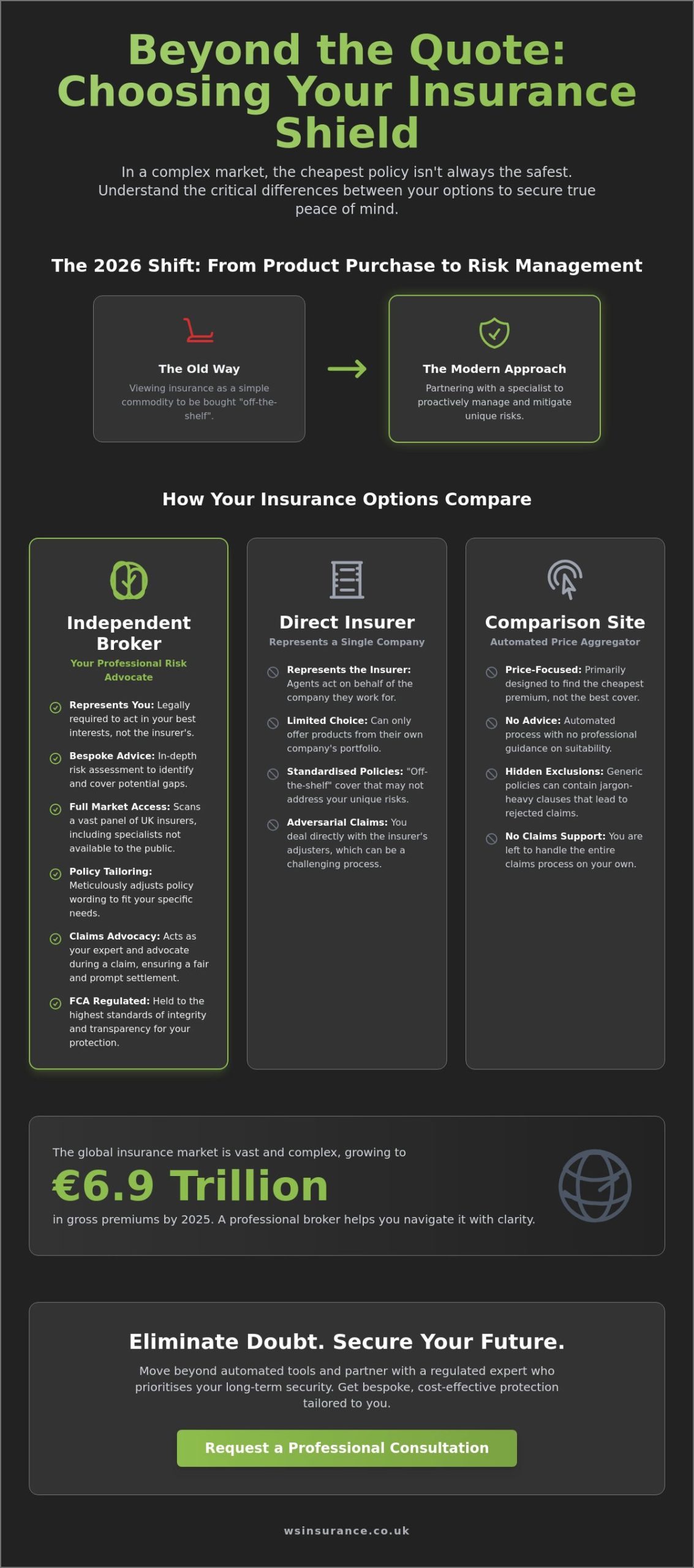
What if the true value of your cover isn’t found in the premium you pay today, but in the claim that’s successfully settled tomorrow? Many people view insurance as a mere commodity, yet the cheapest “off-the-shelf” policy often becomes a significant financial burden when hidden exclusions or jargon-heavy clauses lead to a rejected claim. You’ve likely felt the frustration of sifting through endless, confusing options whilst worrying that your most valuable assets aren’t properly protected. Professional insurance brokers exist to remove this uncertainty, acting as a seasoned shield between you and the complexities of a global market that grew to EUR 6.9 trillion in 2025.
We understand that you want clarity and security without the stress of managing intricate risks alone. This guide helps you evaluate the best specialists to secure bespoke, cost-effective protection tailored to your specific requirements. By moving beyond standard digital comparison tools, you’ll discover how a professional risk advocate acts as a steady hand to eliminate doubt. We’ll examine the essential security mandates for 2026, the shift in property coverage models, and the logical steps to finding a partner who prioritises your long-term safety over a quick transaction.
What You Will Learn in This Guide:
- Understand the essential role of insurance brokers as FCA-regulated risk advisors who act as a steady hand in an increasingly complex global market.
- Learn how a consultative partnership provides a proactive shield against hidden exclusions whilst offering support that automated comparison sites cannot match.
- Discover the practical steps to evaluate a specialist’s industry expertise to ensure your bespoke cover is both thorough and cost-effective.
- Recognise the value of independence and how access to a vast panel of UK insurers eliminates doubt and secures your long-term financial clarity.
What are Insurance Brokers and Why Do You Need One in 2026?
An insurance broker serves as a professional intermediary, acting as your expert guide through the vast and often confusing UK insurance market. Unlike automated platforms, insurance brokers are strictly regulated by the Financial Conduct Authority (FCA). This regulatory oversight ensures they maintain the highest standards of integrity and transparency, providing you with a layer of security that “direct-to-consumer” models often lack. If you’re looking for a foundational definition, understanding What is an Insurance Broker? reveals their primary duty is to act in your best interests, rather than the interests of the insurance company.
By 2026, the industry has undergone a fundamental shift. The focus has moved away from the simple act of “buying a product” towards a more sophisticated model of “managing a risk.” Modern life and business are fraught with complexities, from evolving cyber threats to shifting climate-related property risks. Relying on a generic policy found on a comparison site can leave you dangerously under-insured. A professional broker provides the bespoke advice necessary to identify these gaps, ensuring your protection is as unique as your assets whilst maintaining strict cost efficiency.
The landscape has also changed physically. We’ve seen a steady transition from the traditional high-street office to expert-led national consultancies. This evolution allows brokers to combine personal, localised service with the deep resources and market leverage of a larger firm. It’s a partnership where expertise meets accessibility, ensuring you aren’t just another policy number in a database.
The Core Responsibilities of a Modern Broker
A broker’s work begins long before a policy is issued. Their proactive labour directly results in your confidence and ease. Key tasks include:
- Risk assessment: Identifying vulnerabilities in your business or home that might have been overlooked, such as specific liability exposures or data breach risks.
- Market search: Accessing a broad panel of UK insurers. This often includes specialist providers who don’t deal with the general public or appear on comparison sites.
- Policy tailoring: Meticulously adjusting wordings to ensure your specific risks are actually covered, rather than just listed in a generic schedule.
Broker vs Agent: Understanding the Legal Distinction
It’s vital to recognise that a broker legally represents you, the client. This differs from an insurance agent, who typically acts on behalf of the insurer. This fiduciary duty means your broker is motivated to find the best possible outcome for you, acting as a loyal advocate throughout the life of the policy. To further eliminate doubt, insurance brokers carry their own professional indemnity insurance. This acts as a final layer of protection for you, ensuring the advice you receive is backed by the same level of security you’re seeking for your own assets.
The Role of an Independent Insurance Broker: Beyond the Quote
Many people believe the work of insurance brokers concludes the moment a premium is paid. In reality, the initial quote is merely the starting point of a consultative partnership. A dedicated specialist provides constant oversight, ensuring your protection remains robust even as your circumstances change. Whether you are expanding a business fleet or upgrading a high-value home, your broker manages the necessary mid-term adjustments to prevent coverage gaps. The Role of an Insurance Professional involves this continuous cycle of evaluation. During the annual renewal cycle, a diligent broker doesn’t just send a bill; they re-examine the entire breadth of the market to ensure your pricing remains pragmatic and your coverage remains comprehensive.
Claims Advocacy: Your Shield in Times of Loss
The true measure of a broker’s worth is realised during a claim. This is where “Claims Advocacy” becomes your most vital asset. When a loss occurs, the process can feel adversarial and overwhelming. Your broker steps in as a technical expert to manage the complex dialogue with loss adjusters and underwriters. They argue your case with precision, ensuring that policy wordings are interpreted fairly and that settlements are processed promptly. Consider a complex Business Interruption claim where revenue loss is difficult to quantify; a broker’s expertise in articulating these financial nuances can be the difference between a rejected claim and a successful recovery. They act as a protective shield, translating confusing jargon into clear, actionable updates. This level of support provides a steady hand when you need it most, effectively removing the anxiety of dealing with large, impersonal insurance carriers alone.
Access to Specialist Markets and Lloyd’s of London
Standard “off-the-shelf” policies often fail to address niche or high-value risks. Independent insurance brokers distinguish themselves through their ability to access “wholesale” or specialist markets that don’t deal directly with the general public. This includes the renowned syndicates at Lloyd’s of London. By partnering with specialist insurance brokers, you gain entry to these exclusive areas of the market where risks are underwritten individually rather than through an automated algorithm. This access allows for more competitive pricing on unusual assets and provides a higher degree of customisation. If you feel your current coverage lacks this level of detail, seeking professional insurance guidance is a logical step toward securing your long-term peace of mind.
Comparing Insurance Brokers, Direct Insurers, and Comparison Sites
Direct Insurers: The Pros and Cons
Approaching a direct insurer may be appropriate for very standard, low-value risks where the terms are straightforward. The benefit is a direct line to the provider, but the limitations are stark. You are restricted to a single product set and one fixed price, with no external advice to confirm if that policy is actually the best fit for your needs. Because the insurer’s staff represent the company and not you, there is a distinct lack of advocacy if a claim is subsequently denied or disputed. You are essentially left to manage the relationship alone.
The Comparison Site Trap: Why “Cheap” Can Be Expensive
Comparison sites operate on algorithms that prioritise the lowest headline price above all else. This “DIY” approach often leads to a false sense of security. To achieve those low premiums, essential covers are frequently stripped away or replaced with high voluntary excesses and narrow definitions. When you interpret technical questions without professional guidance, the risk of under-insurance becomes a real threat. For homeowners in particular, understanding the critical differences between a home insurance broker and comparison sites reveals why automated engines so often fall short of providing genuine protection. In contrast, small business insurance brokers take a bespoke approach, conducting a thorough audit of your needs to eliminate doubt. They ensure that “cheap” doesn’t become “expensive” at the point of a claim.
For entrepreneurs and companies, the complexities of liability and asset protection make professional intervention a necessity. High-quality business insurance is rarely a “one-size-fits-all” solution. As noted by the Leading Insurance Industry Association, the role of the intermediary is fundamental in navigating the evolving regulatory landscape. Brokers act as a steady hand, ensuring your commercial interests are shielded by robust, technically sound policies that a generic algorithm simply cannot produce.
How to Choose the Right Insurance Broker for Your Needs
Finding a reliable partner amongst the vast number of insurance brokers in the UK requires a methodical approach. It is about moving beyond basic regulatory compliance to find a firm that acts as a diligent shield for your specific interests. A high-quality broker should offer complete transparency regarding their fee structure and commission models, ensuring there are no hidden costs that cloud your decision-making. You should feel empowered to ask about their internal team structure and, crucially, their specific process for handling complex claims. A broker who cannot clearly articulate their claims advocacy strategy may leave you vulnerable when you need support the most.
Before committing to a long-term partnership, consider this essential checklist:
- Independence: Confirm they have access to the entire breadth of the market rather than a restricted panel.
- Technical Depth: Ask about their experience with risks similar in scale and complexity to your own.
- Transparency: Ensure they are open about how they are compensated for their work.
- Claims Support: Verify they have a dedicated team to manage losses, rather than just passing you back to the insurer.
Vetting for Expertise and Sector Knowledge
Industry specialisation is the cornerstone of effective risk placement. Whilst a generalist might understand the basics of a standard policy, they often struggle with the nuances of niche risks like high net worth home insurance or complex commercial liabilities. When evaluating potential partners, look for case studies or testimonials from clients within your specific sector. A proactive question to ask is: “What is the most common reason a claim is rejected in my sector, and how does the policy you are recommending prevent that?” This level of inquiry forces the broker to demonstrate their technical depth and their ability to tailor wordings to your actual needs. For businesses facing emerging threats such as AI-driven liabilities or supply chain failures, understanding the full spectrum of business risks to insure against is an essential first step before selecting any policy.
The Importance of Personal Accessibility
The experience of modern insurance can often feel impersonal, particularly when dealing with large firms that rely on a “call centre” model. For your long-term security, prioritise insurance brokers that offer a dedicated account executive. This person becomes a steady hand who understands your history, your risk profile, and your future goals. They should feel like an extension of your own management team or household office, providing a single point of contact for every query. This direct, human connection eliminates the frustration of repeating your story to different operators and ensures that your risk management strategy is consistently applied. If you are ready to experience this level of consultative care, you can contact our expert team today for a professional review of your current arrangements.
Why WS Insurance Brokers is Your Trusted Independent Partner
Our Commitment to Transparency and Integrity
Our philosophy is built on the belief that your security should never be a commodity. We prioritise your long-term protection over the immediate transaction, focusing on building lasting relationships based on mutual respect and professional integrity. As a firm regulated by the Financial Conduct Authority (FCA), we adhere to the highest industry standards, ensuring every recommendation is backed by thorough research and technical expertise. We don’t believe in “off-the-shelf” templates or generic solutions. Instead, we perform a proactive, bespoke risk assessment for every client, identifying hidden vulnerabilities and tailoring policy wordings to provide a protective shield that actually works when you need it most. This methodical approach removes uncertainty and provides the peace of mind that only comes from knowing your risks are managed by seasoned professionals.
Securing Your Future with Bespoke Protection
The breadth of our expertise spans a diverse range of sectors, ensuring that whether you require complex commercial property insurance or a meticulously crafted private client portfolio, your assets are in safe hands. We understand that your needs evolve, and our role is to ensure your coverage keeps pace. The next logical step in your journey toward total security is a professional consultation. We provide a comprehensive audit of your current arrangements, identifying potential gaps and offering pragmatic solutions to enhance your protection. This isn’t a high-pressure sales pitch; it’s a consultative review designed to put you back in control of your risk management. We invite you to experience a more personalised, transparent approach to your safety. Contact WS Insurance Brokers today for a comprehensive risk review and let us help you build a secure future with confidence.
Securing Your Peace of Mind for 2026 and Beyond
Navigating the complexities of the modern insurance market requires more than a digital algorithm; it demands a partnership built on technical expertise and unwavering advocacy. You’ve seen how the transition from generic policies to bespoke risk management creates a shield for your assets whilst eliminating the anxiety of hidden exclusions. Professional insurance brokers act as your expert guide, ensuring that your protection is as precise as it is cost-effective. By prioritising personal accessibility and independent market access, you ensure your long-term security is never compromised for a headline price.
Our firm provides independent access to major UK insurers and specialist markets, ensuring your policy isn’t restricted by a narrow panel. As a team authorised and regulated by the Financial Conduct Authority, we offer the transparency and integrity you deserve. You’ll benefit from dedicated claims advocacy and personal account management that replaces automated systems with human expertise. We invite you to request a bespoke risk assessment from our expert brokers to audit your coverage and eliminate doubt. Securing your future is a collaborative journey, and we’re ready to act as your trusted advisor for the years ahead.
Frequently Asked Questions
Do insurance brokers charge a fee for their services?
Most brokers are compensated through a commission paid by the insurance provider, which is already included in the premium you pay. In certain complex commercial cases, a broker might charge a professional fee for their consultative work, but this is always disclosed with complete transparency before you commit. This model ensures that you receive expert risk management advice without facing unexpected or hidden costs.
Is it cheaper to use an insurance broker or go direct?
Using insurance brokers is often more cost-effective because they have access to exclusive rates and specialist markets that aren’t available on comparison sites. Whilst a direct insurer only offers their own product, a broker compares the entire market to find the most pragmatic pricing for your specific needs. You receive better long-term value by ensuring your policy is tailored correctly from the start.
How do I know if an insurance broker is properly regulated?
You can verify a firm’s status by checking the Financial Services Register, which is managed by the Financial Conduct Authority (FCA). Every professional firm of insurance brokers in the UK must be authorised and regulated to provide financial advice. This regulatory oversight acts as a shield for consumers, ensuring that the firm adheres to strict standards of integrity, transparency, and professional conduct.
Can an insurance broker help me if my claim is rejected?
Yes, a broker acts as your technical advocate and will challenge an insurer’s decision if a claim is unfairly rejected or disputed. They use their deep knowledge of policy wordings to argue your case, ensuring that the insurer meets its obligations. This claims advocacy is a vital service that removes the anxiety of dealing with large, impersonal insurance companies during a crisis.
What is the difference between an independent and a restricted broker?
An independent broker has the freedom to search the entire breadth of the market, whilst a restricted broker only works with a limited panel of insurers. Independence is a badge of honour that ensures your advisor isn’t biased toward specific providers. This autonomy allows them to prioritise your security and find the most bespoke protection available across the global insurance landscape.
Do I still need a broker if I only have a small business?
Small businesses often face the most complex risks and don’t have the internal resources to manage intricate liabilities like Professional Indemnity or Cyber & Data Breach Insurance. A broker provides the same level of diligent protection for a start-up as they do for a large corporation. They identify vulnerabilities you might have overlooked, acting as a steady hand to secure your firm’s future. A structured approach to identifying the business risks to insure against is particularly valuable for smaller firms that lack a dedicated risk management function.
How often should I review my insurance with my broker?
You should review your cover at least once a year during the renewal cycle to ensure it still reflects your current risk profile. It’s also essential to contact your broker whenever significant changes occur, such as purchasing new equipment, moving premises, or changing your business activities. Regular audits eliminate doubt and ensure that your protection evolves alongside your business or household needs.
What information should I have ready before contacting a broker?
It’s helpful to have your previous policy schedules, a summary of any claims made in the last five years, and an accurate valuation of your assets. For commercial enquiries, details regarding your annual turnover and staff numbers are also necessary. Providing this information allows your broker to perform a thorough audit and secure a precise, cost-effective solution that matches your actual requirements.