
Key Takeaways
Home insurance is based on rebuild cost, not market value. Understanding this distinction is essential for every UK property owner in 2026.
-
Market value is the sale price of your property including the land, whereas rebuild cost is what it would cost to demolish and completely rebuild the physical structure from scratch using current labour, materials, and professional fees.
-
Using market value instead of rebuild cost can lead to serious underinsurance (reduced claim payouts) or overinsurance (paying higher premiums for no extra benefit).
-
In many UK areas, rebuild cost is lower than market value, but in some rural or low-demand locations, rebuild cost can actually exceed what the property would sell for.
-
Later sections show how to estimate rebuild cost accurately, provide concrete examples across different property types, and answer common questions homeowners and landlords ask.
Introduction: Why Rebuild Cost vs Market Value Matters in 2026
Many UK homeowners still confuse rebuild cost with market value when arranging buildings insurance in 2026. This isn’t surprising—estate agents, mortgage lenders, and online property portals constantly quote sale prices, while rebuild figures rarely come up in everyday conversation.
This confusion leads to real problems: being severely underinsured after a fire or flood damage, or overpaying premiums for years without realising it. Insurers, mortgage lenders, and most landlord policies base buildings cover on rebuild cost, not what an estate agent says the home is worth.
Consider a three-bed semi in Manchester with a £320,000 market value but a £210,000 rebuild cost. Insuring for the wrong figure could leave you tens of thousands short on a claim—or paying for cover you’ll never use. The rest of this article defines both terms, compares them side by side, and gives practical steps to get your sum insured right.
What Is Rebuild Cost?
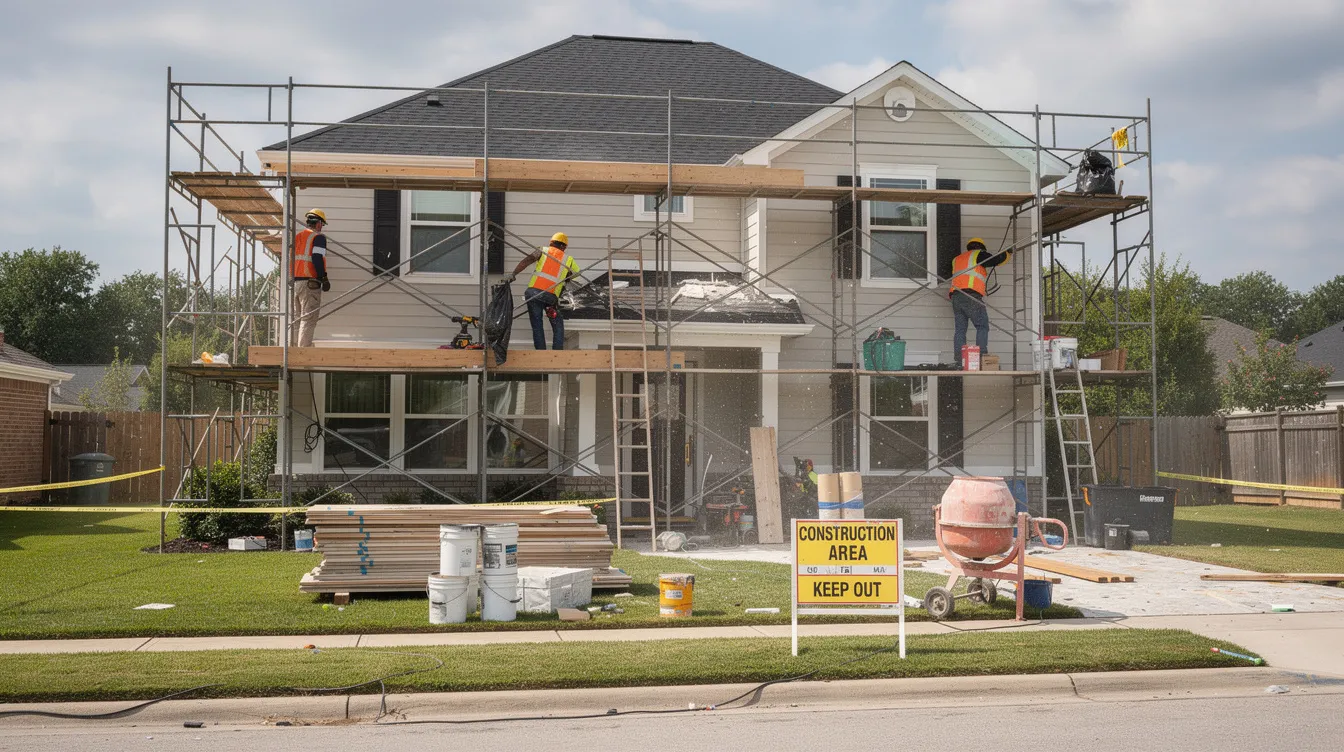
Rebuild cost (sometimes called “rebuilding cost,” “reinstatement value,” or “buildings sum insured”) is the amount it would cost to completely demolish and rebuild your home as it stands now, using current labour, materials, and professional fees.
The main components include demolition and site clearance, foundations and structural elements, roofing, internal fittings such as kitchens and bathrooms, professional fees for architects and surveyors (typically 10-15% of build cost), and statutory costs including building control and planning permissions where relevant. Notably, land value is not included in rebuild cost because the land generally remains even after a total loss such as a fire.
A 90m² mid-terrace in Leeds might have a home’s rebuild cost around £180,000 at approximately £2,000/m², while a 250m² detached house in Surrey could exceed £500,000 due to size, materials, and regional labour rates. Insurers base the “buildings” section of a policy on this figure, and most UK household insurance providers and comparison sites ask for an estimated rebuild cost rather than market price.
Factors That Influence Rebuild Cost
Several key factors determine what it would cost to rebuild your property in 2026.
Property size and layout directly impacts rebuild value. More floor area, extra storeys, extensions, and loft conversions all increase the replacement cost. A single-storey extension adding 30m² might add £50,000-£70,000 to your rebuild figure depending on specification.
Construction type and materials significantly affect costs. Non-standard materials like stone, thatch, or timber frame, as well as listed building status requiring specialist craftsmanship, can add 40-60% to base costs. High-end finishes such as underfloor heating or bespoke joinery push figures higher still.
Location and labour rates create regional variations. Rebuilding in London and the South East in 2026 typically runs £2,500-£4,000/m², while parts of the North East or Wales may see £1,500-£2,000/m². Access difficulties—tight city sites, properties on slopes, or homes in conservation areas—require extra scaffolding, engineering work, or permissions, adding 15-25% in some cases.
Building regulations and energy-efficiency standards also matter. Updated Part L requirements in England mean new builds must meet stricter insulation and heating standards than when many properties were first built, increasing the full rebuild cost.
How Rebuild Cost Is Estimated in Practice
Most homeowners don’t calculate rebuild cost from scratch. Instead, they rely on standard tools and professional valuations to reach an accurate rebuild value.
The Association of British Insurers (ABI) and Building Cost Information Service (BCIS) provide online calculators widely used across the UK insurance market. These tools generate indicative rebuild costs based on floor area, location, property age, and construction type. The basic method multiplies floor area (in m² or square feet) by a local cost per m², then adjusts for features such as attached garages, outbuildings, and special finishes.
For unusual, listed buildings and heritage homes, or very large homes, specialist high net worth home insurance backed by a RICS chartered surveyor providing a professional valuation may be necessary to avoid underinsurance. These bespoke assessments typically cost £500-£2,000 but can prove invaluable for evidencing claims and avoiding disputes.
Many policies include index linking or “inflation protection,” automatically uplifting the rebuild cost each year to reflect rising construction costs. However, this still needs periodic manual review—sharp spikes in materials like timber and steel (up 25% in recent years according to BCIS) can outpace automatic adjustments.
What Is Market Value?
Market value (or sale price) is the amount a willing buyer would pay for the property on the open market at a given time, assuming a standard arm’s-length transaction.
This figure includes land, the building itself, location desirability, school catchment, local amenities, and wider economic conditions such as Bank of England base rates and housing demand. In a popular London suburb, a small 2-bed flat might sell for £500,000 due to the location premium, even though its rebuild cost could be closer to £200,000.
Market value rises and falls with the property market and housing cycles, whereas rebuild cost mainly tracks construction inflation, labour costs, and material prices. Mortgage lenders and estate agents usually focus on market value, which explains why homeowners often reach for this figure when filling out insurance forms—even though it’s the wrong number for buildings insurance purposes.
What Drives Market Value Up or Down
Market value responds to completely different forces than rebuild cost.
Macro-economic factors include Bank of England base rate changes, national economic conditions, and government schemes affecting buyer demand. A 1% rate rise can significantly cool prices, while Help to Buy schemes historically inflated values in certain areas.
Local factors matter enormously: catchment areas for high-performing schools, transport links (proximity to Elizabeth line stations, for example), crime rates, and future regeneration projects all influence what buyers will pay.
Property-specific features that influence buyers more than rebuild cost include garden size, parking availability, potential for extensions, and interior styling trends. A new kitchen might add 5-10% to market value but only increases rebuild cost by the structural increment for replacement. A burst pipe causing water damage affects both figures differently—repair costs impact insurance claims, while poor maintenance over time can gradually reduce market value.
Rebuild Cost vs Market Value: Key Differences
Rebuild cost and market value serve different purposes and respond to different factors. Understanding the difference between rebuild cost and market value is essential for proper financial protection.
The core distinction is what each figure includes. Market value incorporates the land, location desirability, and buyer sentiment, while rebuild cost covers only the physical structure, demolition, and reconstruction expenses. Insurers use rebuild cost because their obligation is restoring the building after an insured event, not buying you a new property elsewhere. Market value fluctuates with housing cycles and can swing 10-20% in a year; rebuild cost moves more steadily with construction inflation.
Consider these concrete UK examples:
|
Property |
Market Value |
Rebuild Cost |
Key Factor |
|---|---|---|---|
|
2-bed flat, Birmingham city centre |
£260,000 |
£185,000 |
Location premium inflates market value |
|
Stone cottage, Cumbria |
£190,000 |
£230,000 |
Specialist masonry and remote access inflate rebuild |
|
3-bed semi, Bristol estate |
£360,000 |
£230,000 |
Suburban demand vs standard construction |
|
For home insurance, rebuild cost is what matters. For selling, buying, or remortgaging, market value takes priority. Confusing the two leads to serious financial consequences. |
Why Insurance Is Based on Rebuild Cost, Not Market Value
An insurer’s obligation is to repair or rebuild the physical property after damage caused by covered events—not to compensate you for its sale price or investment value. Most policies cover restoration to pre-loss condition, making land value irrelevant since land survives even severe events like fires.
Claim payments are normally capped at the sum insured (your buildings limit), which should match the full cost to completely rebuild plus a sensible percentage buffer for fees and inflation. Some policies include day-one cover or index-linked provisions, but these assume your starting figure was reasonably accurate.
Consider this scenario: a total loss fire destroys a home with a true rebuild cost of £280,000, but the owner insured for £400,000 based on market value. The insurer pays the actual rebuild cost (£280,000), not the higher sum—the homeowner simply overpaid premiums for years. Conversely, if insured for £200,000, the shortfall creates a devastating funding gap, which is why high value home insurance for £1m+ properties often focuses on robust rebuild valuations and underinsurance protection.
Underinsurance and Overinsurance: Real-World Consequences
Underinsurance (sum insured below rebuild cost) is surprisingly common in the UK and can drastically reduce payouts during the claims process. Overinsurance means paying more than necessary for cover you’ll never fully use.
Many UK insurers apply an “average” or proportional settlement clause. If you insure for only 70% of true rebuild cost, the insurer may only pay 70% of any claim—even for partial damage. This can reduce payouts by hundreds of thousands in severe cases.
Worked example: A house has a true rebuild cost of £300,000 but is insured for £210,000 (70%). A kitchen fire causes £60,000 damage. Due to the average clause, the insurer pays only £42,000, leaving £18,000 for the owner to fund from personal possessions or savings.
Overinsurance scenario: Insuring at £350,000 (market value) when the accurate rebuild cost is £220,000 might increase annual premiums by 30-40%—for no additional payout benefit, since claims settle on actual losses. Whether you choose monthly instalments or annual payment, you’re overpaying.
The goal isn’t the highest number but the right number—adequately covered without funding unnecessary higher premiums.
Common Mistakes Homeowners Make
Many errors arise from assumptions rather than deliberate choices.
Common mistakes include using last purchase price or an estate agent’s valuation as the sum insured, ignoring major renovations that increase rebuild cost, or never updating figures after 10-15 years of construction-cost inflation. Relying on outdated survey reports without adjusting for 2026 labour and materials—especially after sharp price rises—creates significant exposure.
Some policyholders simply copy last year’s number at renewal without checking whether the insurer’s index-linked uplift still reflects actual cost changes. Landlords can compound errors by insuring multiple residential properties in a portfolio at the same flat amount per property, regardless of different sizes, construction types, or whether they’re used on Airbnb or similar platforms, or as UK holiday homes and short‑let properties, so it’s worth revisiting your broader UK home insurance cover and policy structure.
How to Work Out the Right Rebuild Cost for Your Property
While only a professional survey can give a precise figure, most property owners can get a reliable estimate using recognised tools and basic information about their home.
Step-by-step approach:
-
Gather property details: year built, size in m² or square feet, number of storeys, construction type
-
Use a reputable online calculator (ABI/BCIS calculator or your insurer’s tool)
-
Sense-check the result against your insurer’s indicative range
-
Adjust for features: garages (+5-15%), outbuildings (+10-20%), non-standard construction
For listed buildings, properties in conservation areas, homes with extensive bespoke features, or leasehold properties with complex shared structures, seek a professional valuation from a RICS chartered surveyor. The single most effective way to avoid claim disputes is having documented evidence of how your sum insured was calculated.
Significant changes—a loft conversion in 2024, a new extension in 2025, or a high-spec kitchen refit—should trigger a rebuild cost review before next renewal. Keep renovation invoices as they support both future claims and accurate estimates.
How Often Should You Review Your Rebuild Cost?
In a period of fast-rising building costs (as seen in 2024-2026), leaving your rebuild figure unchanged for many years creates real risk.
Regularly review your estimated rebuild cost at least every 2-3 years, and immediately after any major renovation, extension, or structural change. Even with index linking, sharp spikes in materials can outpace automatic annual uplifts—steel and insulation costs have seen double-digit increases recently.
Landlords with multiple property types should build rebuild-cost reviews into portfolio management, perhaps aligning with tenancy renewals or annual accounts and taking advantage of UK insurance market softening to review cover and rebuild sums. Keep written or digital records (surveyor reports, calculator outputs, renovation invoices) to support any future claim and demonstrate how your sum insured was chosen.
Practical Examples: When Rebuild Cost and Market Value Diverge
These examples using realistic 2026 UK figures illustrate how dramatically the numbers can differ.
Example 1 – High-value area: A 2-bed flat in Islington carries a market value of £650,000, driven almost entirely by location. The rebuild cost sits around £260,000. Insuring at market value would mean substantially overpaying—and gaining nothing extra when making a claim.
Example 2 – Rural character home: A stone cottage in Northumberland has a market value of £210,000 (low demand, limited buyers). However, the rebuild cost reaches £280,000 due to specialist stonework, conservation area requirements, and remote access logistics. Relying on sale price here would leave the owner severely underinsured.
Example 3 – New-build estate: A 3-bed semi on a 2023 development near Bristol shows market value at £360,000 and rebuild cost at £230,000. Even standard homes need separate figures—the gap, while smaller, still matters for adequate buildings cover.
Example 4 – Landlord HMO: A converted 5-bed HMO in a university town has a market value of £550,000 (rental yield driving demand) against a rebuild cost of £400,000. Landlords must focus on rebuild cost despite market value including landlord contents and rental potential, and may also need appropriate block of flats insurance for multi-occupancy buildings, often arranged through specialist Bristol-based block management insurance brokers.
The learning point: the same building can have very different market values yet similar rebuild costs across regions. Only a rebuild-based sum insured reliably protects against physical loss and further loss from a total claim.
Frequently Asked Questions
These questions cover common edge cases and practical issues not fully addressed above, helping homeowners and landlords compare quotes and make informed decisions about contents cover, home emergency add-ons, voluntary excess levels, and optional extras.
Should I ever insure my home for its market value instead of rebuild cost?
For standard UK buildings insurance, the correct approach is to insure for rebuild cost, not market value. The insurer pays to repair or rebuild the home’s structure—not to buy you a replacement property on the open market. Even if your mortgage lender quotes a “minimum cover” figure based on loan amount or purchase price, the policy itself needs a buildings sum insured close to the full rebuild cost.
Only in special contexts—such as specialist high-net-worth policies with agreed value clauses for fine art or antiques—might a market-value-type figure apply, and this differs from standard buildings cover. For ordinary home insurance or contents insurance, market value is the wrong figure, but high-net-worth owners may need bespoke high-value property insurance for unique or luxury homes or broader high net worth insurance in the UK where rebuild costs and specialist features are much higher.
How does this apply if I own a leasehold flat rather than a house?
For most UK leasehold properties, the freeholder or managing agent arranges block insurance for the entire block based on a professional rebuild valuation. Leaseholders pay their share via service charges. Check your annual service charge or building management pack to see the insured amount and last valuation date, and review whether you personally need buildings insurance as a leaseholder flat owner.
Individual leaseholders typically only need contents insurance for permanent fixtures and personal possessions inside the flat—not a separate buildings policy. If your building has a shared-freehold arrangement, ensure the buildings policy reflects the full block’s rebuild cost, not one flat’s market value, and that you understand the scope of your block insurance responsibilities and cover.
What should I do if my insurer’s suggested rebuild cost seems too low or too high?
First, double-check all details you provided—floor area, storeys, construction type, postcode. Small input errors produce unrealistic outputs. Run numbers through an independent tool like the ABI/BCIS calculator to see whether both estimates align.
If significant discrepancy remains, contact your insurer, ask how their figure was calculated, and request they note any agreed higher sum insured on your policy wording. For complex cases involving professional valuations, specialist advisers with expertise in insurance for Chartered Surveyors and high net worth insurance for premium assets can also help ensure figures are robust and defensible. For definitive resolution on complex or high-value properties, commission a RICS surveyor to provide a written assessment both parties can rely on. This helps during the claims process and ensures you’re adequately covered, while specialist chartered surveyors professional indemnity insurance protects surveyors themselves when giving such advice.
Does the difference between rebuild cost and market value affect my council tax or stamp duty?
Council tax bands and stamp duty land tax in England and Northern Ireland (or equivalent in Wales and Scotland) are based on property transaction value, not rebuild cost. Your chosen buildings sum insured for insurance purposes doesn’t change your council tax band or purchase costs.
Rebuild cost is only relevant to insurance—and indirectly to how well you’re protected financially after accidental damage, flood damage, or fire. Legal expenses in property transactions relate to market value; insurance relates to rebuild.
How do renovations and extensions change my rebuild cost and insurance?
Any significant structural work—loft conversion, rear extension, new outbuilding—increases your home’s rebuild cost because there’s more structure to replace. The information service from BCIS suggests extensions typically add £2,000-3,000/m² depending on specification.
Inform your insurer before starting major works, check conditions applying during renovations, and update the rebuild cost once complete. Keep architects’ plans, contractor quotes, and final invoices—these documents help estimate new rebuild costs accurately and support any builders insurance requirements during the works. Lower premiums aren’t worth pursuing if they leave part of your upgraded property uninsured. Consider burglar alarms and security upgrades that might reduce premiums while protecting your investment. A competitive price on insurance means nothing if the policy doesn’t cover what you’ve built.