
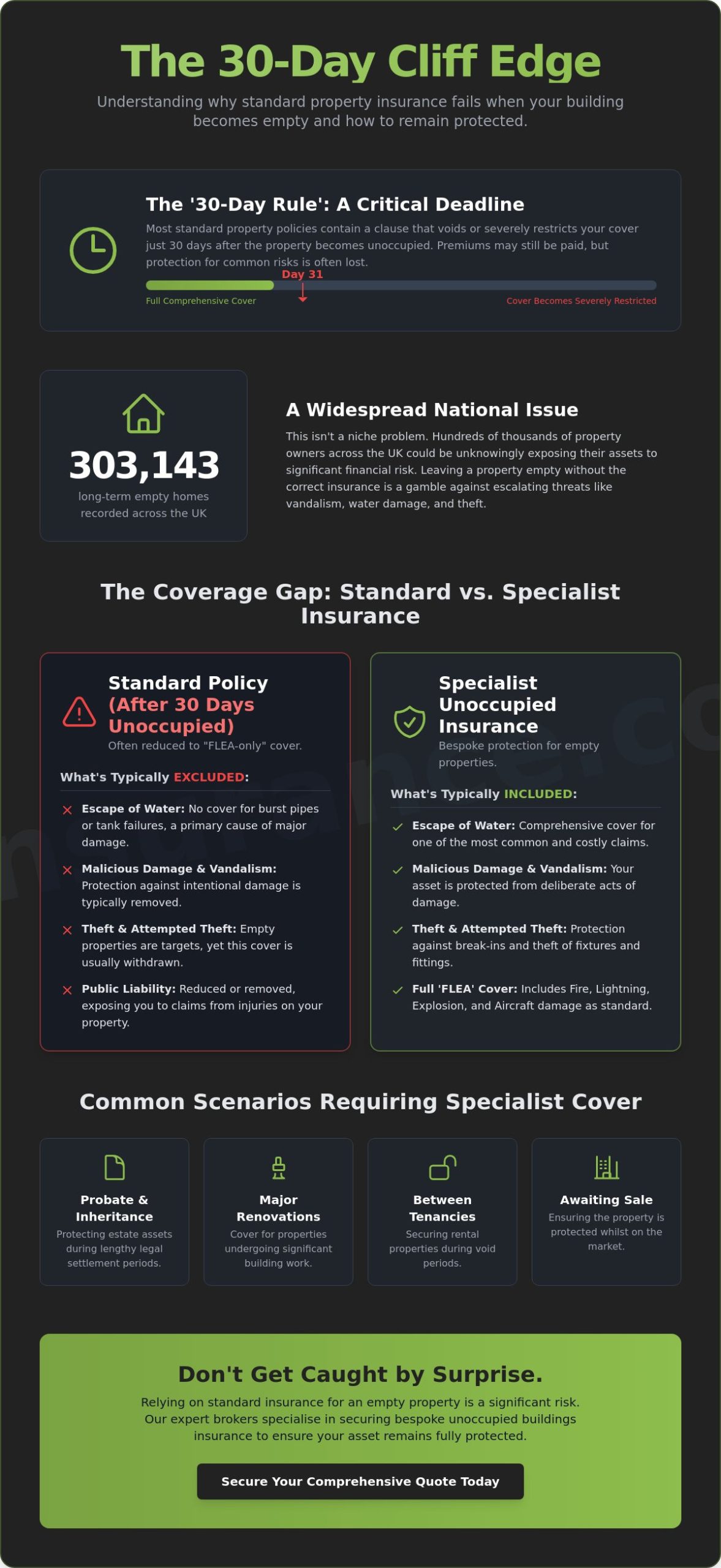
Did you know that your standard property cover could effectively expire just thirty days after your building becomes empty? Most owners assume their existing policy provides a safety net, but the reality is that “unoccupied” status triggers a fundamental shift in risk that mainstream insurers are often unwilling to carry. Securing specialist unoccupied buildings insurance is no longer a niche requirement; it is a vital necessity for the owners of the 303,143 long-term empty homes currently recorded across the UK. We recognise the anxiety that comes with leaving a property unattended, particularly the fear of a rejected claim following a burst pipe or an act of vandalism.
You deserve the peace of mind that comes from knowing your asset is truly protected. This 2026 guide will help you understand the complex definitions of “vacant” versus “unoccupied” and explain why standard insurance often fails when you need it most. You will discover how to meet your policy obligations, avoid the pitfalls of unoccupancy clauses, and ensure your property remains a secure investment whilst it awaits its next chapter. Our goal is to remove the uncertainty from your insurance journey, providing a steady hand to guide you through the complexities of property protection.
Key Takeaways
- Recognise the limitations of the “30-day rule” and why standard property policies often fail to protect assets left empty for extended periods.
- Clarify the industry definitions of “unoccupied” versus “vacant” to prevent the accidental invalidation of your cover.
- Implement a robust risk management strategy, from drainage protocols to heating minimums, to keep your property in peak condition whilst it stands empty.
- Discover how specialist unoccupied buildings insurance provides a bespoke safety net that addresses the high-risk nature of empty properties.
- Understand the value of consultative expert guidance in navigating niche markets and securing comprehensive protection through an independent broker.
Understanding Unoccupied Buildings Insurance and the 30-Day Rule
Most property owners assume their standard policy remains a steadfast shield regardless of how long the building stands empty. However, the reality is far more fragile. In the UK insurance market, the “30-day rule” is a standard provision that significantly restricts or entirely voids your cover once a building has been empty for more than a month. This transition often happens silently. You might continue paying premiums whilst unknowingly holding a policy that offers almost no protection for the most common risks. This is why unoccupied buildings insurance is a fundamental requirement rather than an optional extra. It provides a specialist framework designed to manage the unique vulnerabilities of a property in transition, ensuring that your financial security isn’t compromised by a change in residency status.
Why Risk Profiles Change When a Property is Empty
Insurers view empty buildings through a lens of heightened risk because the absence of human presence accelerates damage. Risk is not static. A minor pipe leak in an occupied home is usually spotted within hours; in an empty property, that same leak can run for weeks, causing structural subsidence and rot. Beyond maintenance, empty assets are magnets for anti-social behaviour. Burglars and squatters look for tell-tale signs like uncollected post or overgrown gardens. In extreme cases of long-term neglect, owners might even face Empty Dwelling Management Orders, where local authorities intervene to bring the property back into use. Without “eyes on the street”, risks like fire or vandalism can escalate into total losses before anyone even raises the alarm.
The Consequences of Relying on Standard Cover
Relying on a standard residential or commercial policy for an empty building often leads to a “FLEA-only” restriction. This industry term refers to cover that only protects against Fire, Lightning, Explosion, and Aircraft. Whilst these sound comprehensive, they exclude the most frequent causes of loss. Key exclusions typically include:
- Theft and Attempted Theft: Standard policies often stop covering break-ins once the 30-day limit is reached.
- Malicious Damage: Vandalism or arson by third parties is frequently excluded.
- Escape of Water: Damage from burst pipes or failed tanks is a primary reason for claim rejection in empty properties.
If a pipe bursts in mid-winter, your standard insurer will likely reject the claim entirely if the unoccupancy limit has passed. Even if a claim is partially accepted, payouts are frequently reduced because the risk was not accurately disclosed. This gap in protection can leave you facing tens of thousands of pounds in repair costs with no financial recourse. Understanding the full insurance claim process before you need it is essential, as knowing the stages involved can help you avoid the common pitfalls that lead to rejected payouts. Our role is to act as a shield, ensuring your policy remains valid and your asset stays secure through dedicated unoccupied buildings insurance.
When Specialist Cover Becomes Essential: Common 2026 Scenarios
Probate and Inherited Properties
The death of a property owner often marks the beginning of a lengthy legal process. Executors carry a heavy fiduciary duty to protect the estate’s assets, yet they often find themselves in a difficult position regarding insurance. Most standard providers are reluctant to maintain cover once the policyholder has passed away and the property stands empty. With probate timelines in 2026 often extending beyond twelve months, executors need flexible, rolling terms that provide security without the pressure of fixed annual commitments. Our role is to act as a shield, ensuring the building remains protected whilst the legalities are settled, removing one layer of anxiety during a difficult time.
Renovations and Building Works
Property owners often use void periods to modernise or expand their assets. It is vital to distinguish between minor cosmetic updates and major structural changes. Whilst painting or new carpets rarely cause an issue, anything involving the building’s envelope or structural integrity changes the risk profile entirely. In these instances, you may need to consult our Insurance for Building Works: A Guide for Property Owners to understand the specific requirements for construction sites. Standard unoccupied buildings insurance often excludes properties undergoing significant structural work, making it essential to match your cover to the actual activity occurring on-site.
Extended Absences and Second Homes
Life transitions frequently lead to properties being left unattended for months at a time. This is common for individuals entering long-term residential care or professionals embarking on extended overseas work assignments. Similarly, holiday homes that remain empty during off-peak seasons face unique vulnerabilities. Whilst the UK has over 300,000 long-term empty homes, looking at statistics on vacant homes internationally shows that unoccupancy is a widespread challenge for insurers globally. Whether your absence is planned or prompted by health changes, securing a policy that understands these extended timelines is the only way to ensure your investment remains safe. If you are unsure whether your current absence triggers a need for change, you can speak with our expert team to clarify your obligations.
Unoccupied vs. Vacant: Navigating the Coverage Gaps
Precision in terminology is your first line of defence. In the insurance world, “unoccupied” and “vacant” are not interchangeable terms, and misunderstanding them can lead to a rejected claim. An unoccupied property typically contains furniture and personal effects, suggesting that a resident could return at any time. In contrast, a vacant property is stripped of all contents and is often not ready for immediate habitation. This distinction is vital because it fundamentally alters the risk of arson, theft, and malicious damage. Insurers often view a furnished property as a higher fire risk due to the presence of flammable materials, whereas a vacant property might be more susceptible to squatters or copper piping theft. Correctly identifying your property’s status ensures your unoccupied buildings insurance remains valid when you need it most.
Accurate disclosure regarding the state of the property is the only way to eliminate doubt during the claims process. If you inform an insurer that a building is unoccupied but it is actually vacant, you have misrepresented the risk. This could lead to a total policy invalidation. Specialist providers offer different tiers of protection based on these definitions, allowing for a customised approach that reflects the actual state of your asset. By being transparent about whether the carpets are still down or the utilities are disconnected, you allow the broker to act as a steady hand, guiding you toward the most robust protection available.
The “FLEA” Cover Trap
Many property owners fall into the trap of accepting the most basic level of protection, often referred to as FLEA cover. This acronym stands for Fire, Lightning, Explosion, and Aircraft. Whilst this satisfies the bare minimum requirements of some mortgage lenders, it leaves gaping holes in your security. It excludes theft, malicious damage, and escape of water. For a property standing empty, these are the three most common causes of loss. A comprehensive unoccupied buildings insurance policy acts as a shield against these everyday threats. We often find that lenders demand more than just FLEA cover to protect their interest in the asset; it is essential to check your mortgage terms before selecting a restricted policy.
Policy Conditions and Inspections
Securing the right policy is only half the battle; maintaining it requires diligent adherence to specific conditions. Most specialist insurers mandate regular inspections of the premises, typically on a weekly or fortnightly basis. These aren’t just casual walk-pasts. You must conduct a thorough internal and external check to identify issues like forced entry or damp. Maintaining a formal inspection log, complete with dates and photographs, is a standard requirement for 2026 claims adjusters. This log serves as your evidence of a “Duty of Care”, proving that you haven’t simply abandoned the asset. If you can’t demonstrate this proactive labour, you risk a claim being rejected for negligence.
Risk Management: Protecting Your Property Whilst It Stands Empty
Insurance acts as your financial safety net, but proactive risk management serves as your primary shield. When a building is left unattended, the goal is to eliminate the “signals” of unoccupancy that attract unwanted attention. Simple actions, such as arranging for mail redirection or hiring a gardener to maintain the exterior, can prevent your property from becoming a target. Beyond aesthetics, technical maintenance is crucial. For properties empty during winter, most unoccupied buildings insurance providers require the heating to be maintained at a minimum of 7 degrees Celsius. This prevents pipes from freezing and bursting, a leading cause of catastrophic water damage claims.
If you anticipate the property will remain empty for more than 90 days, we strongly recommend draining down the water system entirely. This removes the risk of “escape of water” altogether, providing total peace of mind whilst the building is out of use. It’s also a moment to ensure all external access points, including outbuildings and garages, are secured with high-standard locks. By taking these steps, you demonstrate a diligent “Duty of Care” that protects both your asset and your insurance validity. To secure a tailored plan that reflects your specific security efforts, contact our specialist team for a bespoke quote.
Smart Technology and Monitoring in 2026
The landscape of property protection has evolved significantly. In 2026, smart technology offers a layer of security that was previously impossible for empty homes. Smart leak detectors can alert your smartphone the moment moisture is sensed, allowing for immediate intervention before a drip becomes a flood. Similarly, remote-monitored security cameras and smart thermostats allow you to oversee the building’s environment from anywhere. Many insurers now recognise the value of these systems, sometimes offering premium discounts for properties equipped with approved security suites.
Physical Security Measures
Physical barriers remain essential for any empty asset. High-quality deadlocks and window sensors should be your baseline. In high-risk areas, or where a property is vacant rather than just unoccupied, boarding up ground-floor windows may be a necessary precaution. Light timers are a simple yet effective way to simulate occupancy, creating the illusion of a lived-in home during the evening hours. Don’t forget to secure side gates and ensure that no ladders or tools are left externally that could assist a break-in.
The Inspection Protocol
A “thorough” inspection involves more than a quick glance through the front window. You must enter the property, check every room for signs of damp or forced entry, and test the taps to ensure systems are functioning. If you live a significant distance away, consider employing a professional property management service to handle these visits. They can maintain the formal inspection log required by 2026 claims adjusters. Before you finalise your arrangements, it’s wise to review our building insurance quote checklist to ensure every detail of your security measures is accurately reflected in your policy.
Securing Bespoke Protection with an Independent Broker
Unoccupied property is technically classified as a “non-standard” risk. This means the automated algorithms used by mainstream comparison sites often struggle to assess the nuances of your specific situation. Whether your property is a family home in probate or a complex industrial unit awaiting sale, unoccupied buildings insurance requires a human touch to ensure the cover is both valid and cost-effective. We act as a steady hand, navigating the specialist markets to find underwriters who understand that an empty property isn’t necessarily an abandoned one. This proactive labour on our part results in a policy that mirrors your actual needs rather than a generic, off-the-shelf product.
The Value of Independent Advice
Automated platforms prioritise speed over precision, which can leave you with a policy that fails during a claim due to a technicality. An independent broker provides “whole of market” access, reaching niche underwriters who don’t list their products on mainstream engines. This ensures you aren’t restricted to a handful of providers but have a comprehensive view of the most competitive options available. Our role is to act as your shield; we advocate for you during the claims process, ensuring the insurer meets their obligations. This consultative approach removes the anxiety of the unknown, shifting the focus from a simple transaction to long-term asset security.
How to Get an Accurate Quote
- The specific reason for unoccupancy, such as probate, renovation, or a pending sale.
- The anticipated duration of the vacancy to avoid paying for unnecessary cover.
- A detailed list of security measures, including any smart sensors or physical locks installed.
- Your long-term intentions for the asset once it is reoccupied or sold.
For those managing a broader portfolio, it’s worth consulting our business insurance guide to ensure all your commercial interests are aligned. As specialists in the commercial property insurance market, we understand that every empty building has a specific set of requirements. By choosing a partner who values transparency and integrity, you ensure that your property remains protected, regardless of how long it stands empty. We’re here to eliminate doubt and provide the customised security your investment deserves.
Ensuring Your Property Remains a Secure Investment
An empty building represents a significant financial commitment and a unique set of challenges. By acknowledging the limitations of standard policies and implementing a robust inspection protocol, you take the first vital steps toward comprehensive protection whilst the property stands empty. Precision in your property’s definition and transparency regarding its security measures are the keys to maintaining policy validity.
We act as a steady hand in a complex market, serving as a shield between you and the technicalities of specialist cover. Our firm is authorised and regulated by the Financial Conduct Authority; we provide access to specialist UK underwriters and offer dedicated claims support and advocacy. This proactive approach removes the anxiety of the selection process, ensuring your unoccupied buildings insurance is tailored to your exact needs.
Don’t leave your asset’s security to chance. Secure your empty property with a bespoke unoccupied buildings insurance quote from WS Insurance Brokers. We’re ready to help you protect your investment with clarity and professional integrity.
Frequently Asked Questions
Is unoccupied home insurance more expensive than standard cover?
Specialist cover generally carries a higher premium than standard residential policies because the underlying risk is significantly elevated. Insurers account for the increased likelihood of undetected escape of water or malicious damage occurring whilst no one is present to intervene. By working with an independent broker, you can access niche underwriters who offer more competitive pricing for these non-standard risks compared to the restricted options found on mainstream comparison sites.
Can I get unoccupied property insurance for just three months?
Flexible policy durations are a hallmark of the specialist market, allowing you to secure protection for three, six, or nine months. This is particularly useful for properties in probate or those undergoing a short-term sale process. If your circumstances change, these policies can often be extended, ensuring you don’t pay for an entire year of cover when only a few months are required to bridge the gap between residents.
Does unoccupied insurance cover theft of contents?
Coverage for contents depends heavily on whether the building is defined as unoccupied or vacant. If the property remains furnished, many unoccupied buildings insurance policies will include a level of contents cover, provided specific security requirements are met. However, if the property is stripped bare, insurers typically exclude theft of contents entirely. You should always clarify the value of items remaining on-site to ensure the policy reflects the actual risk to your assets.
What happens if I forget to tell my insurer my house is empty?
Failing to notify your insurer that a property is empty usually leads to the total invalidation of your policy once the standard 30-day limit passes. If you attempt to claim for a fire or leak after this period, the insurer will likely reject the claim because the risk profile was not accurately disclosed. This “silent” invalidation is a common pitfall that leaves owners facing significant financial losses with no recourse from their provider.
Do I need to turn off the water and gas in an unoccupied property?
Most specialist insurers require you to either turn off the utilities and drain the water system or maintain a minimum constant temperature, typically 7 degrees Celsius, during winter months. These conditions are designed to prevent catastrophic pipe bursts when the property is unattended. You must check your specific policy wording, as failure to comply with these utility requirements can lead to a rejected claim if an escape of water occurs during your absence.
What is the difference between “unoccupied” and “vacant” for insurance?
The primary distinction lies in the presence of furniture and personal effects. An unoccupied property is one that is ready for immediate habitation but currently lacks residents, whilst a vacant property is completely empty of contents. Insurers view vacant buildings as higher risks for squatters and the theft of fixtures, such as copper piping. This often results in more restricted cover or higher premiums for truly empty assets compared to furnished ones.
Will my insurance be valid if I visit the property once a month?
Visiting once a month is rarely sufficient to satisfy the strict inspection conditions found in specialist unoccupied buildings insurance. Most providers mandate a thorough internal and external check every seven to fourteen days to ensure any issues are caught early. You must maintain a formal log of these visits, as claims adjusters will request this evidence to prove you have met your duty of care to the property throughout the empty period.
Can I get insurance for an empty property that is being renovated?
You can secure cover for empty properties undergoing building works, but it requires a specialist policy that accounts for construction risks. Standard unoccupied cover often excludes damage caused by renovations or structural changes. It is vital to disclose the full extent of the works, from cosmetic updates to major extensions, so your broker can ensure the policy remains valid whilst contractors are on-site and the building is in transition. For a comprehensive overview of your obligations during a project, our guide to contract works insurance UK explains how to bridge the gap between standard unoccupied cover and the specialist protection a construction site demands.